Tirzepatide antibodies: why a positive binding test does not equal lost effect
A striking percentage in a drug study is easy to misread when the laboratory test is unfamiliar.
A striking percentage in a drug study is easy to misread when the laboratory test is unfamiliar. In a pooled analysis of tirzepatide phase 3 studies, just over half the treated participants developed treatment-emergent anti-drug antibodies. That did not mean that half the participants stopped responding to treatment.
Two assays, two questions
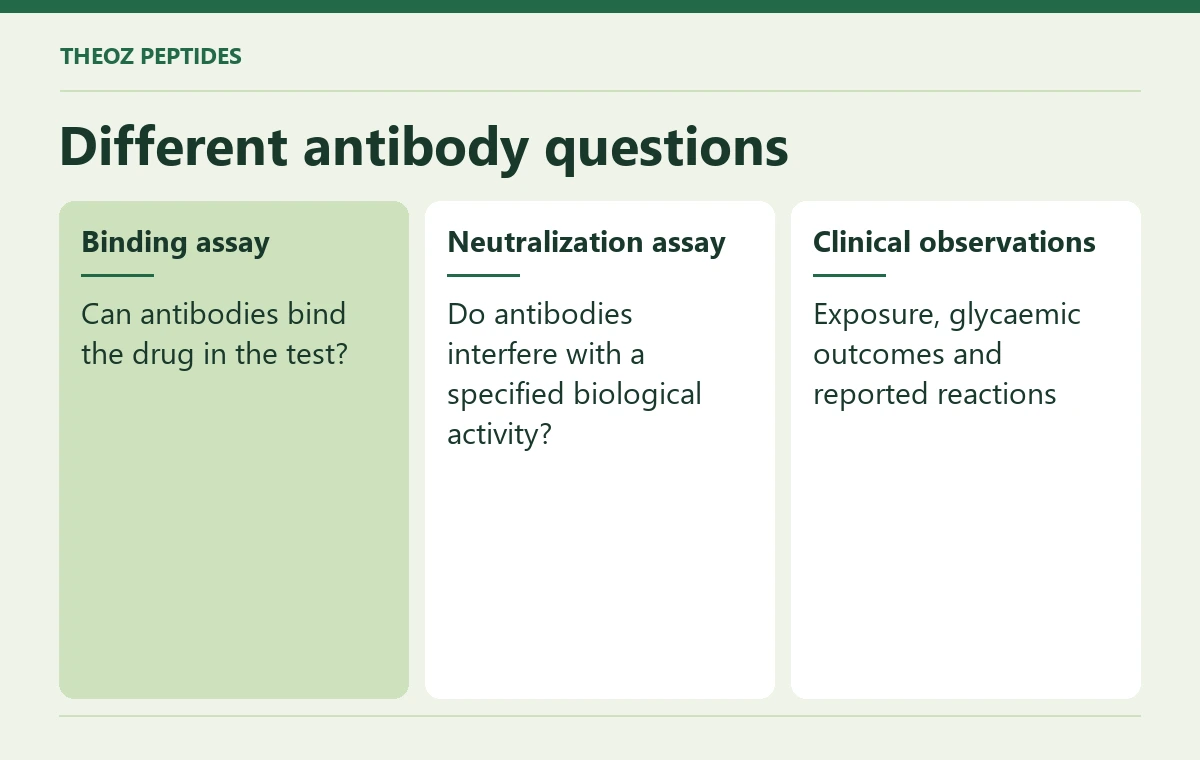
The investigators' immunogenicity analysis distinguished antibodies that bound the drug from antibodies that neutralized its measured activity at a receptor. A binding assay can identify recognition by the immune system without demonstrating a loss of receptor activity. Neutralization tests ask a narrower functional question under laboratory conditions. The investigators also looked for specific cross-reactivity with the body's native hormones. A shared word, “antibody,” does not make those outcomes interchangeable.
Put the denominators back
Among 5,025 treated participants assessed for this program, 51.1 percent developed treatment-emergent anti-drug antibodies. The published proportions with neutralizing antibodies against tirzepatide activity at the GIP and GLP-1 receptors were 1.9 percent and 2.1 percent, respectively. Do not add those two percentages to obtain a count of unique people: one person can contribute to both test categories. Also avoid converting the frequency of binding antibodies into the frequency of treatment failure.
| Different antibody questions | What to look for |
|---|---|
| Binding assay | Can antibodies bind the drug in the test? |
| Neutralization assay | Do antibodies interfere with a specified biological activity? |
| Clinical observations | Exposure, glycaemic outcomes and reported reactions |
What happened to clinical measurements?
The authors found no evidence in these data that antibody status materially changed tirzepatide pharmacokinetics or measured efficacy. Hypersensitivity and injection-site reactions were reported more frequently among people with treatment-emergent antibodies, while most such events were mild or moderate. The data do not establish that every reaction was antibody-mediated, nor can a local symptom diagnose antibody formation. Persistent or severe symptoms deserve appropriate clinical assessment.
A better question to take to a Bali appointment
If a clinician is evaluating a change in diabetes control, bring the actual glucose record, complete medicine history and timing of any symptoms. A laboratory immunogenicity study helps explain how scientists examine loss of effect; it does not provide a personal diagnosis, a routine testing recommendation or a reason to switch retail presentations. Keep the exact product studied and the person being assessed on different lines in the research note.