Why an endocrinologist may read free T4 alongside TSH in pituitary disease
Most people encounter TSH as a first-line thyroid test.
Most people encounter TSH as a first-line thyroid test. A person with pituitary disease can face a different diagnostic question: does the pituitary provide an appropriate signal to the thyroid? That is one reason an endocrinologist may want the original free T4 and TSH results together when reviewing hormone care in Bali.
What the two measurements describe
The Endocrine Society guideline on hormone replacement in hypopituitarism recommends measuring free T4 and TSH to evaluate central hypothyroidism. In this particular clinical setting a low free T4 can occur alongside a TSH that fails to rise as expected. A value falling inside a general TSH reference interval does not automatically resolve the question. The clinical history, laboratory method and other pituitary findings still matter.
What a cropped report hides
An app may highlight abnormal values and hide results printed in the reference interval. If a clinician receives only the highlighted line, they may not see the relationship that prompted further investigation. Bring the complete report with units, laboratory intervals, dates and the reason for testing. Note whether the patient was acutely ill or using relevant medicines when the sample was taken. Do not infer a diagnosis from an example in an article.
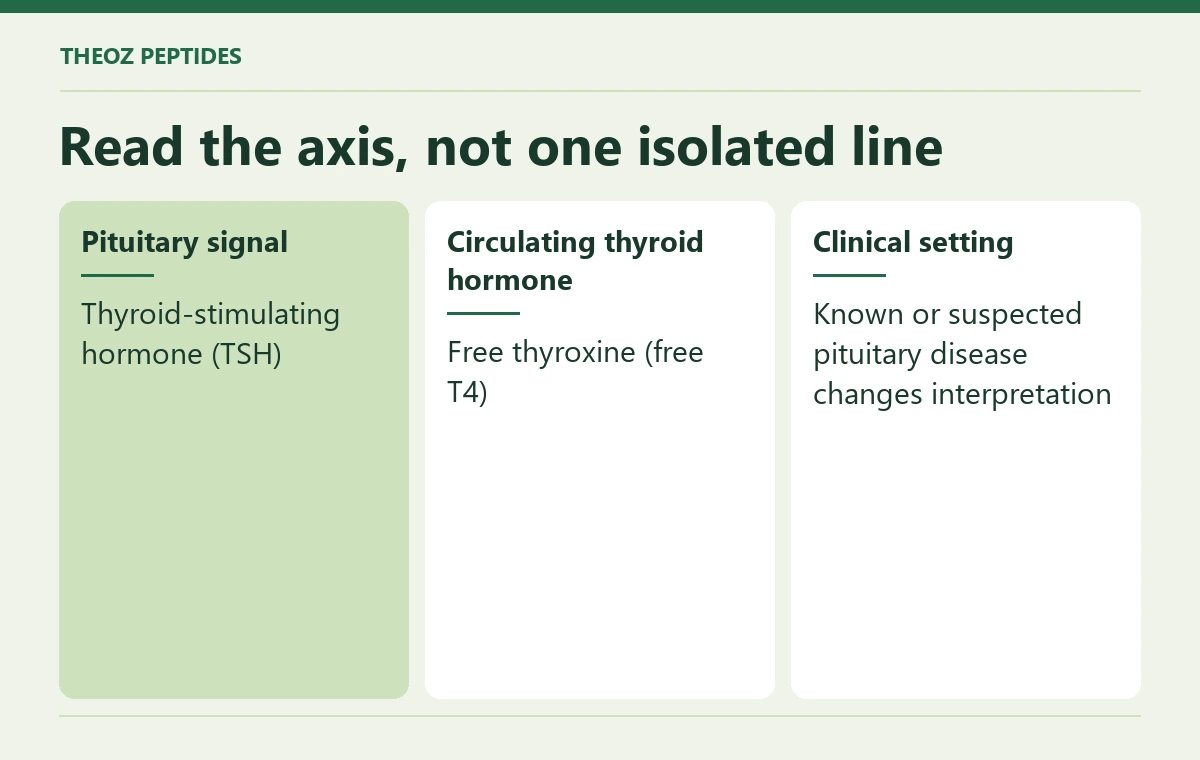
| Read the axis, not one isolated line | What to look for |
|---|---|
| Pituitary signal | Thyroid-stimulating hormone (TSH) |
| Circulating thyroid hormone | Free thyroxine (free T4) |
| Clinical setting | Known or suspected pituitary disease changes interpretation |
Why it appears in a discussion about growth hormone
Someone evaluated for one pituitary hormone deficiency may also need assessment of other axes. TSH, free T4, GH and IGF-I are not alternative names for the same measurement. A somatropin product's identity cannot establish which axis is affected. The clinician reviewing pituitary disease can decide the appropriate testing and sequence of treatment. Starting or changing medication from a laboratory screenshot would bypass that assessment.
A concrete question for the appointment
If the overseas note says only “thyroid normal,” ask whether it referred to primary thyroid disease or included assessment for a possible central cause. Give the Bali clinician any pituitary surgery, radiation, injury or endocrine history that prompted the original tests. Retaining both the signal and the hormone response preserves a clinical distinction that a single green tick on a laboratory website can erase.