Tirzepatide and prediabetes in Bali: the three-year trial in numbers
See who entered the SURMOUNT-1 extension, how many developed type 2 diabetes at 176 weeks and what the 17-week follow-up adds to a conversation in Bali.
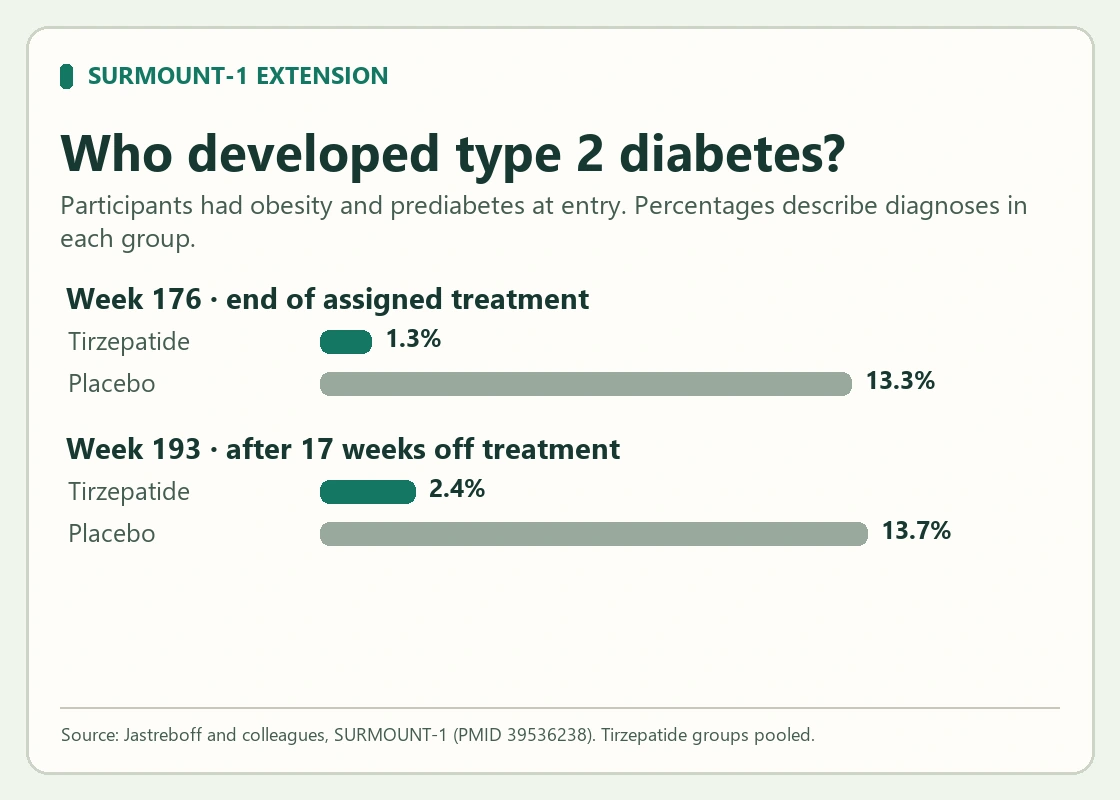
Among study participants with both obesity and prediabetes, 1.3% in the combined tirzepatide groups and 13.3% in the placebo group received a type 2 diabetes diagnosis during 176 weeks. Those are proportions of people who developed diabetes. They are easy to mistake for blood sugar values when a social media post drops the study title.
Why the starting diagnosis matters
The original SURMOUNT-1 trial enrolled 2,539 people. The extended analysis focused on 1,032 who also had prediabetes at the outset. That distinction changes whom the findings describe. Someone already living with type 2 diabetes would ask about managing an existing condition. Someone with a single unfamiliar glucose reading may first need to establish what that result means.
The primary three-year report describes the randomized treatment period and the period after treatment. People assigned to placebo provide a comparison drawn from the same trial population. An unrelated weight-loss programme in Bali, however well documented, does not provide the same kind of comparator.
Two dates and two different questions
| Time since randomization | Tirzepatide groups with a diabetes diagnosis | Placebo group with a diabetes diagnosis |
|---|---|---|
| 176 weeks, end of assigned treatment | 1.3% | 13.3% |
| 193 weeks, after 17 weeks off assigned treatment | 2.4% | 13.7% |
At 176 weeks, the absolute difference was 12 percentage points. That is another presentation of the comparison between groups. It is different from the hazard ratio in the paper, which uses the timing of diagnoses during follow-up. It is also different from a 12-point fall in an individual's HbA1c. No such calculation follows from these figures.
The second row matters because a reader planning to return home from Bali may be thinking about the years after treatment. The researchers actually observed a 17-week off-treatment interval. It gives some information beyond the active treatment period, while leaving the question of lifetime protection open. A percentage at week 193 is a cumulative observation at that point. Do not add it to the percentage at week 176.
A laboratory result needs its own unit
Look at the heading on the document you received. HbA1c is commonly reported as a percentage or in mmol/mol. A fasting plasma glucose measurement is reported in glucose concentration units such as mmol/L or mg/dL. The USPSTF screening guidance also lists an oral glucose tolerance test. The tests answer related questions with different measurements.
An HbA1c percentage and the percentage of participants who developed diabetes can appear in the same paragraph with the same percent sign. Ask what is being counted. One describes a blood sample. The other describes how often a diagnosis occurred in a group over years. This simple distinction is more helpful than memorizing a trial headline.
Preparing a follow-up in Bali
Take the lab report that prompted the question, any earlier report with comparable results, dates, units and your current medication list. If one sample was fasting, keep that information with the result. If the reports come from different countries, preserve their original units and intervals. A clinician can confirm the diagnosis and assess which follow-up makes sense in your circumstances.
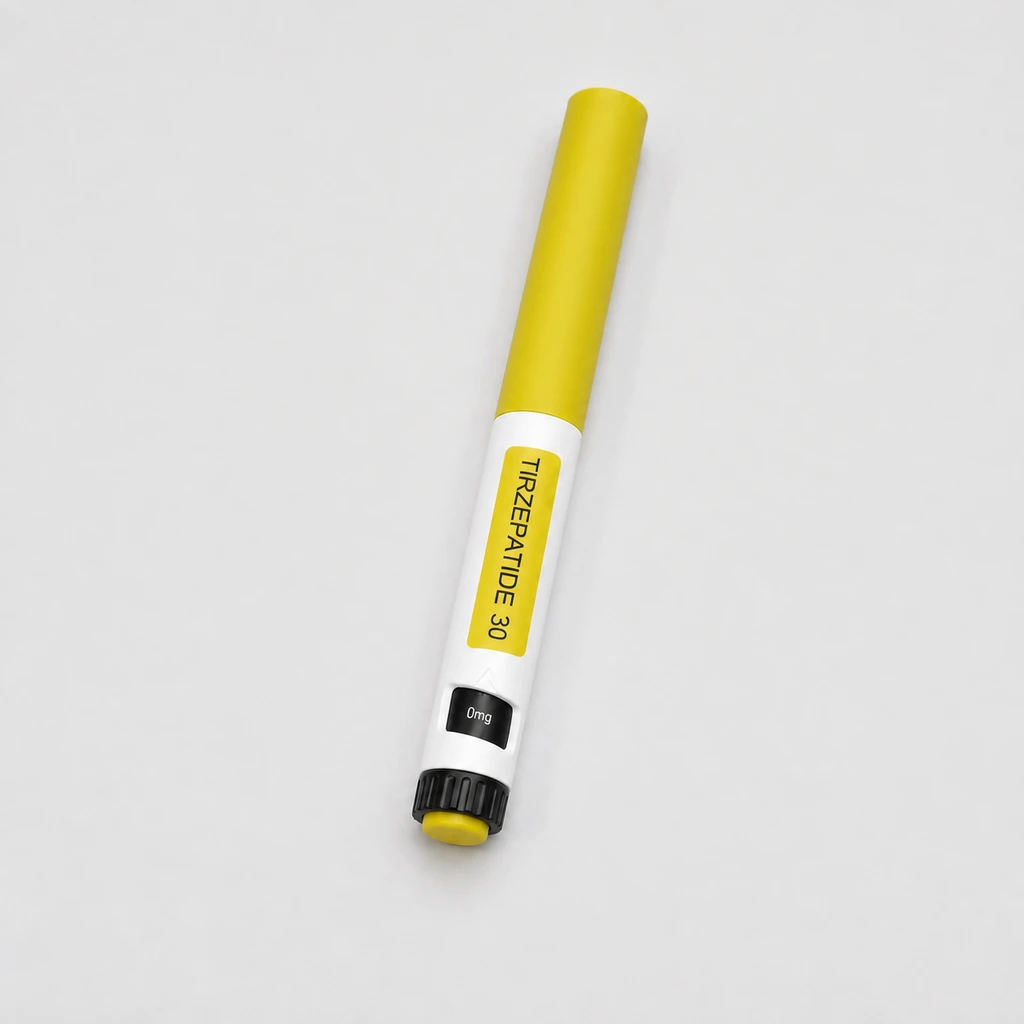
The local tirzepatide listing is a reference for recognising the labelled formats. Neither the 30 mg nor the 60 mg total on a device is a study duration or a personal treatment plan. If you are already receiving care, bring the exact product information to your clinician before discussing a change of brand or device.
For the appointment, write two separate questions. First, “What does my latest result establish about my current glucose status?” Second, “What outcome would we measure over time if we decided on treatment?” The study answers a population-level question exceptionally clearly. Keeping your two personal questions separate makes that evidence much easier to use.
Can two people with prediabetes use the same trial percentage as a personal forecast?
Their starting risk and clinical circumstances can differ even if their laboratory reports use the same diagnostic word. Duration of follow-up also matters. Ask the clinician who knows your history what the observed group difference contributes to your own decision and which measurements they would use to assess progress over time.