Retatrutide and liver fat in Bali: what the MRI percentages mean
A phase 2 study measured changes in liver fat by MRI. Learn how to read the baseline threshold, relative percentages and the difference between liver fat and fibrosis.
In a retatrutide study, an 82.4% reduction referred to the relative change in liver fat in one trial group at 24 weeks. It did not mean that participants lost 82.4% of their body weight. If an ultrasound report in Bali led you to search for retatrutide and fatty liver, the measurement behind that headline is the place to start.
Who qualified for the MRI study?
Researchers selected 98 participants from a larger obesity trial. To enter this part of the study, participants had metabolic dysfunction-associated steatotic liver disease (MASLD) and a liver fat fraction of at least 10% on an MRI measurement called proton density fat fraction, or MRI-PDFF. The research question concerned that selected population. A person with vague abdominal symptoms or a mildly abnormal blood result would not automatically meet those entry criteria.
The substudy followed participants for 48 weeks. Its primary outcome was the mean relative change from baseline at week 24. These two time points sometimes appear side by side in news coverage. Check which one the number belongs to. The study authors provide the group sizes, methods and results in their primary report.
Percent and percentage points on a scan
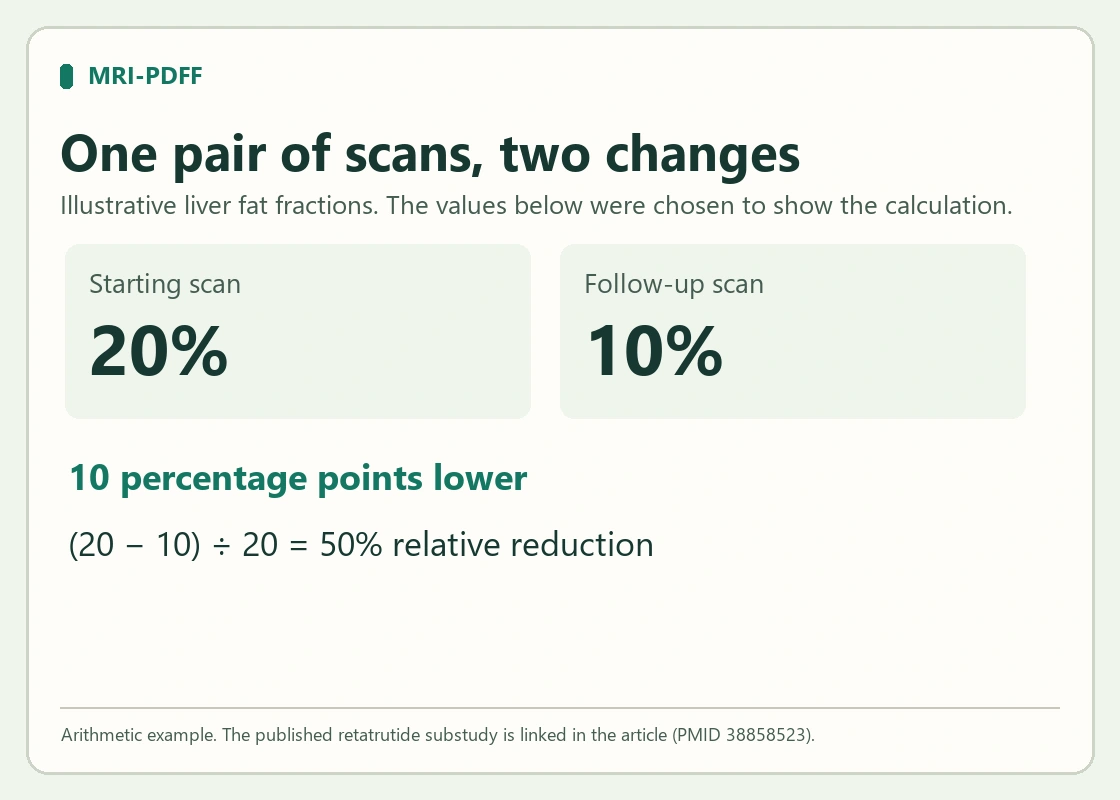
Imagine that a person's MRI-PDFF goes from 20% to 10%. The difference is ten percentage points. The reduction relative to the original value is ten divided by twenty, or 50%. Both numbers describe exactly the same pair of hypothetical scans. This example shows the arithmetic and does not predict a response to treatment.
In the actual trial, the four retatrutide groups had mean relative changes at week 24 ranging from −42.9% to −82.4%. The placebo group's mean relative change was +0.3%. The measurements belong to randomized study groups. A group average cannot be used to calculate how much fat remains in an individual liver, even if you know that person's starting value. Individual follow-up requires an individual measurement.
Keep fat, inflammation and scarring on separate lines
An MRI fat fraction quantifies an imaging feature. Fibrosis describes scarring. Liver enzymes on a blood report and stiffness on an elastography report are different measurements again. A decrease in the MRI fat fraction alone does not tell a clinician what happened to every one of those features. Replacing one test name with another can make a treatment headline sound much stronger than the study design allows.
| If your report says | Keep alongside the result |
|---|---|
| MRI-PDFF | Percentage, scan date and previous value from a comparable technique |
| Ultrasound mentions fatty change | The radiologist's wording and date; preserve the original description |
| Liver enzyme result | Test name, unit and laboratory interval |
| Stiffness or fibrosis assessment | Method, units if reported, and the interpreting clinician's comments |
Bring the right records to a Bali consultation
An expat may have a scan in Singapore, blood tests in Bali and a clinic note in another language. Put them in date order. Mark where the measurement method changed and leave missing numbers blank. An ultrasound report saying “fatty liver” cannot supply a numerical baseline for an MRI percentage-change calculation. A locally repeated blood test cannot fill that gap either.
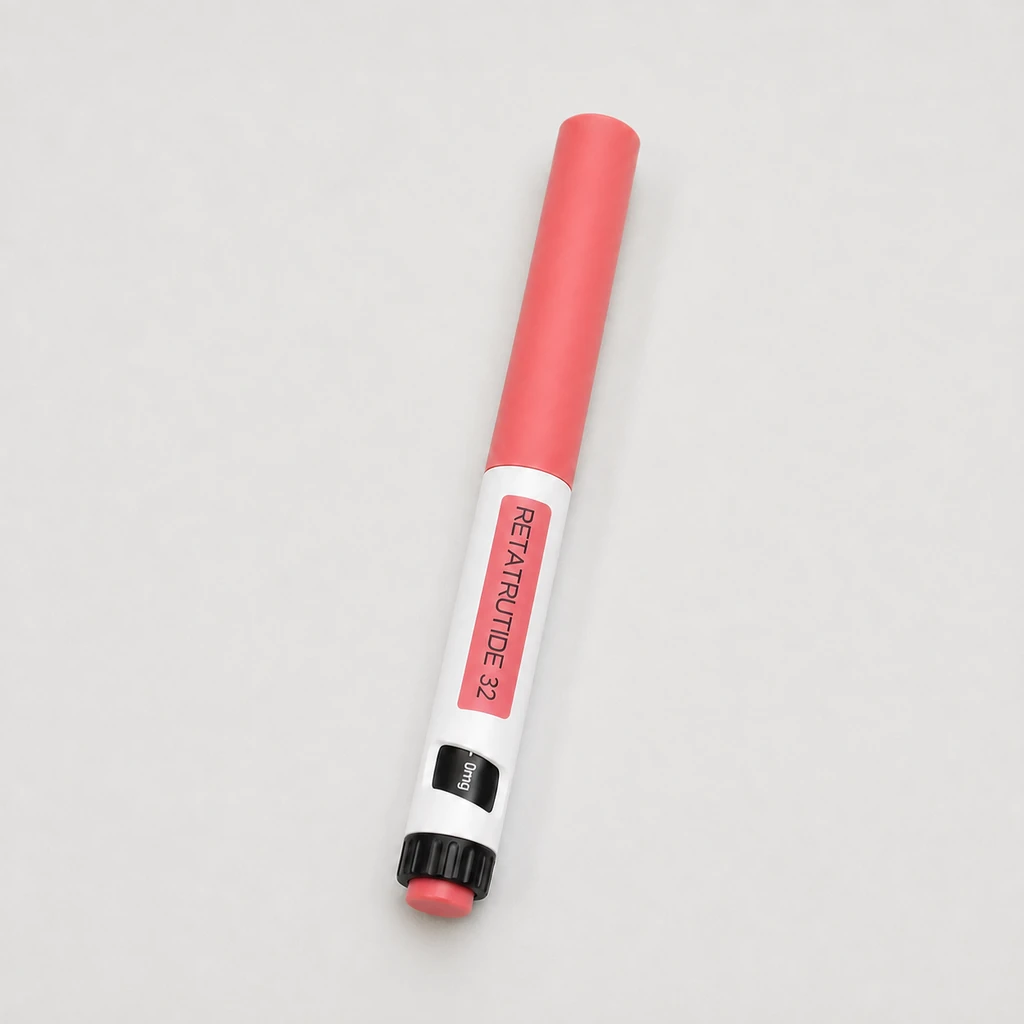
The Theoz retatrutide listing can help identify the pack and its labelled total content if a clinician needs to know which product you are asking about. A 32 mg figure on a pack describes a separate object from the study groups or the percentage on a scan. Bring the original product label if product identity is part of the discussion.
A useful final question is whether the goal of the next investigation is to measure fat again, assess the risk of scarring or understand a blood-test abnormality. The same publication can provide background for all three conversations. Its primary endpoint answers only the first one directly.
Can I compare two percentages from different reports?
Check that both actually name MRI-PDFF and that the reports identify comparable measurements. A liver stiffness value in kilopascals, a percentage weight change and a fat fraction all describe different quantities. If a clinic translated the report, keep the original page containing the technique and units as well as the translated summary.