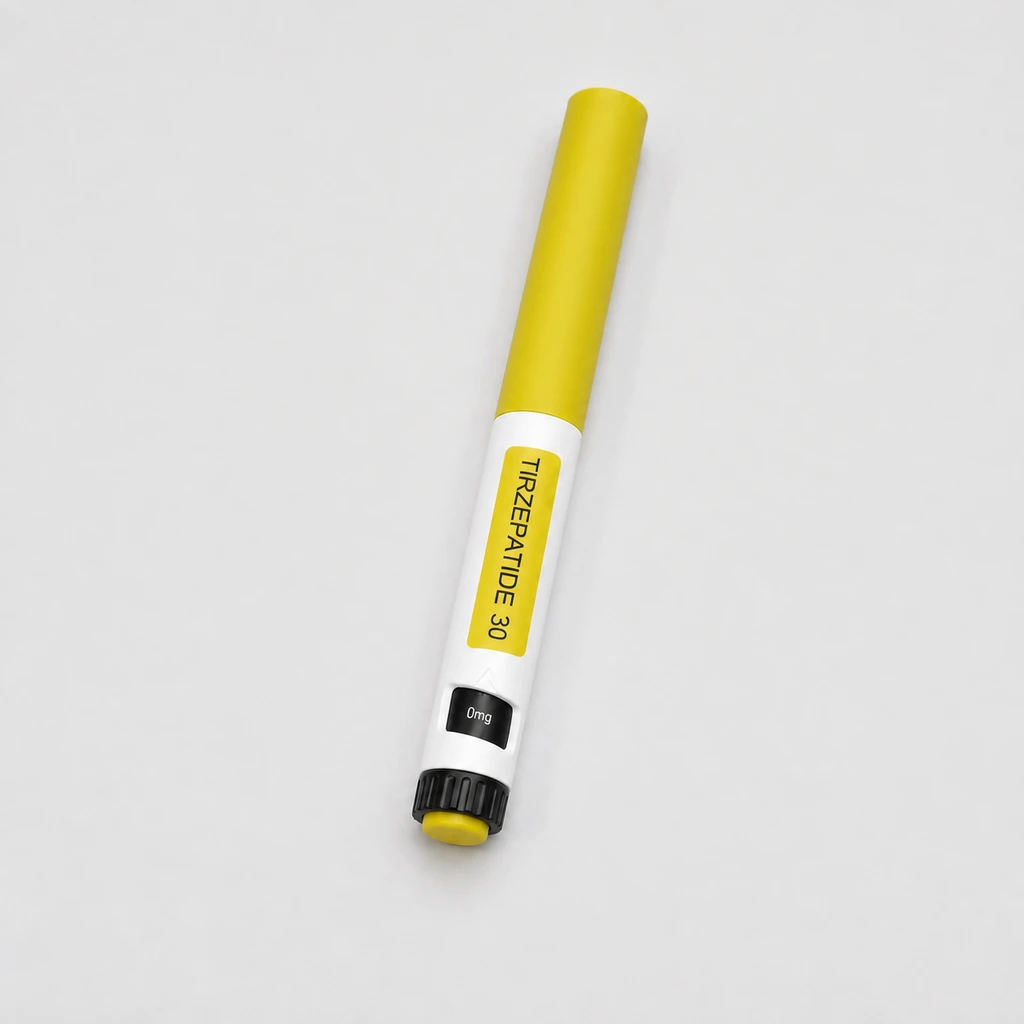
When a liver trial reports MASH resolution, what happened to fibrosis?
A guide to the two biopsy questions asked in SYNERGY-NASH and why a blood enzyme, an imaging result and a fibrosis stage cannot replace one another.
What would count as better liver health? A blood test, a scan and a biopsy can all tell a clinician something important, but their units describe different things. Someone looking at an ultrasound report in Bali cannot read a fibrosis stage or a treatment response straight off a weight-loss chart. The tirzepatide SYNERGY-NASH study illustrates the distinction.
Identify the starting diagnosis
SYNERGY-NASH enrolled people with biopsy-confirmed metabolic dysfunction-associated steatohepatitis and moderate or severe fibrosis. MASH describes steatohepatitis in a metabolic setting. Fibrosis describes scarring assessed separately. Entry on the basis of biopsy findings matters. A fatty appearance on a scan, a raised enzyme or an increased waist measurement alone would not reproduce the trial's eligibility criteria. That distinction becomes important when reading a headline that shortens the population to “people with a fatty liver.”
Translate the endpoint into two questions
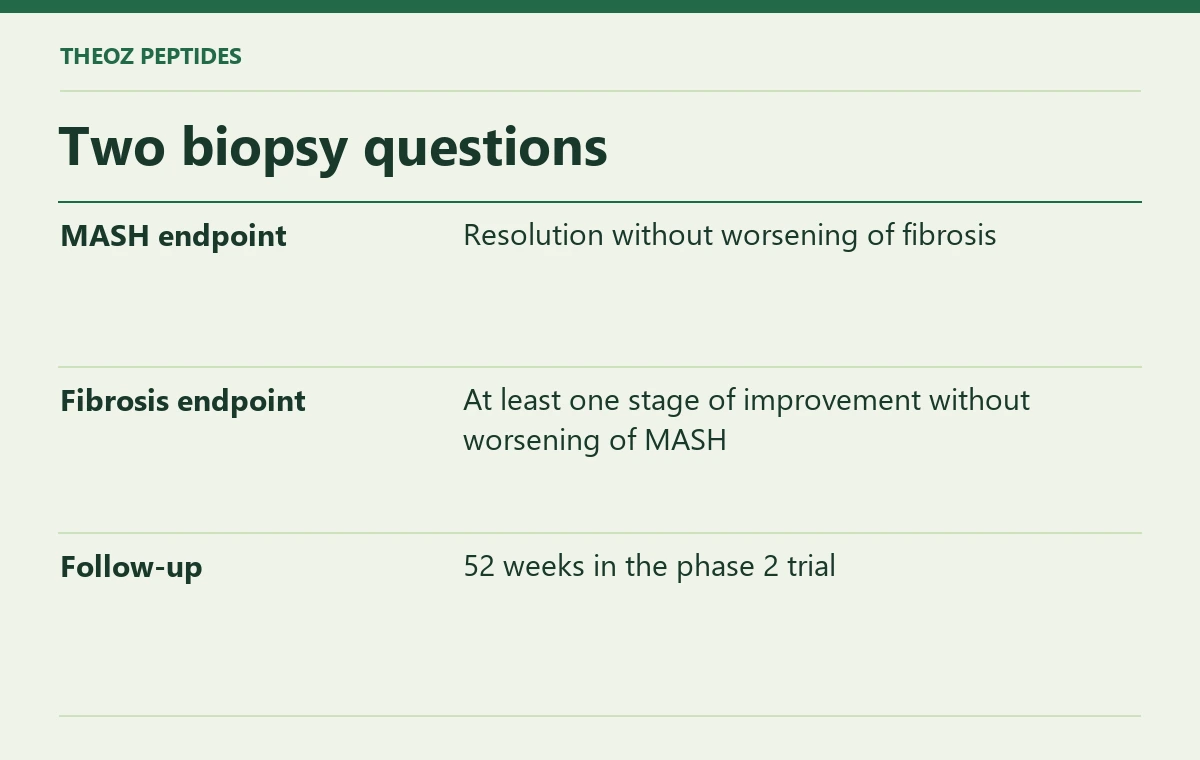
At 52 weeks the primary outcome asked whether MASH had resolved without a worsening of fibrosis. Resolution of steatohepatitis and no worsening of scarring both had to hold. “No worsening” allows a fibrosis stage to stay the same. The investigators separately assessed at least a one-stage improvement in fibrosis without worsening of MASH. That is a stronger requirement on the scarring measure and a different requirement on the inflammation measure.
| Two biopsy questions | What to look for |
|---|---|
| MASH endpoint | Resolution without worsening of fibrosis |
| Fibrosis endpoint | At least one stage of improvement without worsening of MASH |
| Follow-up | 52 weeks in the phase 2 trial |
Consider a fictional eligibility exercise. A biopsy no longer meets the definition of steatohepatitis, and fibrosis remains at the previous stage. That meets the first definition. It would need an actual stage improvement to meet the separate fibrosis criterion. No participant-level result or retail product claim follows from this example.
Keep a clinical report in its own units
If a Bali clinician orders repeat testing, keep the report type and date alongside its result. Ultrasound wording, a magnetic-resonance fat fraction, liver enzymes and biopsy grades cannot be placed on one numerical scale. Ask which change would be clinically meaningful for the test you actually had. A phase 2 study over 52 weeks also leaves longer-term clinical outcomes as a separate research question.
What to take away from the trial
Use its exact diagnosis, lettered fibrosis stage if supplied by your clinician, observation period and two endpoint definitions. They give more information than a general claim that tirzepatide “heals the liver.” A listing for a tirzepatide pen gives format and labelled contents. Matching the ingredient word does not establish that an individual's condition or a locally supplied product matches what the study evaluated.