Tirzepatide and low blood sugar: what does “per patient-year” mean?
Read the low-blood-sugar results from SURPASS-6, including who was taking basal insulin, what counted as an event and how repeat episodes affected the rate.
When a study reports 0.4 episodes of low blood sugar per patient-year, does that mean 40 percent of patients had one? No. One quantity counts episodes over observation time and the other counts people with an episode. A person can contribute several events to the first measure and only once to the second. The distinction matters when a Bali clinician discusses the safety evidence for a diabetes treatment with someone who already uses insulin.
Who was in SURPASS-6?
The primary report published in JAMA enrolled 1,428 adults with type 2 diabetes inadequately controlled on basal insulin. Participants continued a background insulin glargine regimen under the study protocol. Researchers randomized them to additional tirzepatide or mealtime insulin lispro. The comparison therefore asks about two add-on strategies. An account that leaves out basal insulin describes a different treatment situation.
Count episodes separately from people
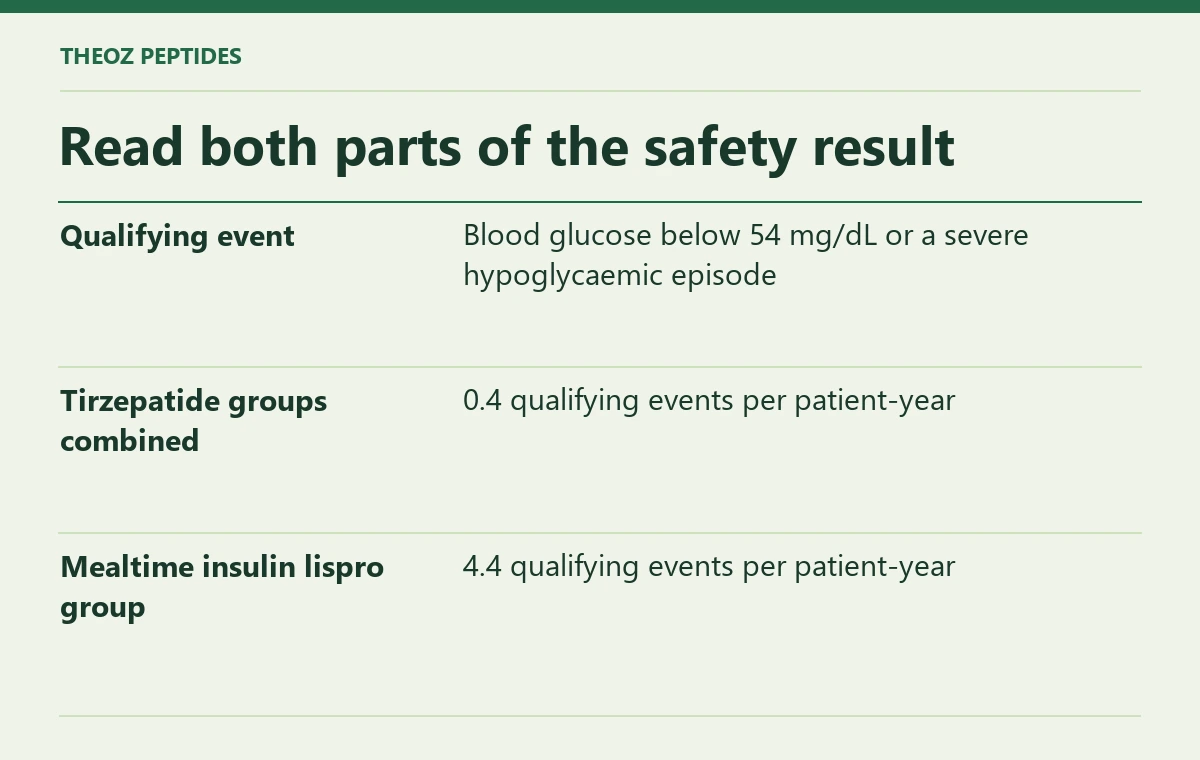
For the reported event rate, a qualifying episode involved blood glucose below 54 mg/dL or severe hypoglycaemia. In the pooled tirzepatide groups, researchers observed 0.4 qualifying events per patient-year; in the insulin lispro group, 4.4. A patient-year is an amount of observation time. Ten people each followed for one year contribute ten patient-years, as would twenty people each followed for half a year. An event rate can exceed one without implying that more than 100 percent of participants experienced an event.
| Read both parts of the safety result | What to look for |
|---|---|
| Qualifying event | Blood glucose below 54 mg/dL or a severe hypoglycaemic episode |
| Tirzepatide groups combined | 0.4 qualifying events per patient-year |
| Mealtime insulin lispro group | 4.4 qualifying events per patient-year |
Imagine 25 people observed for one year, with ten episodes among them. That works out to 0.4 events per patient-year. If the same person had all ten, only one of the 25 experienced an episode. If ten different people had one each, ten of the 25 did. The same rate gives two very different pictures of how events were distributed. This illustration is arithmetic, separate from the actual trial participants.
Where to find the person-level answer
Table 4 of the paper also reports the number of participants with clinically significant hypoglycaemia. In the lispro arm, 340 of 708 participants, or 48 percent, had an event. The tirzepatide arms report separate participant percentages by assigned group. Keep those denominators intact instead of converting the pooled event rate into a percentage or attributing the pooled rate to each individual.
Bring the right details to an appointment in Bali
If low readings are a concern, bring the actual glucose figures, dates, associated symptoms and all current prescribed medicines to your diabetes care team. A person with severe or ongoing symptoms needs prompt clinical assessment. A population-level rate cannot determine what caused a specific episode or tell someone how to alter insulin. The research gives a clear comparison of two supervised strategies; the person's own treatment record supplies the information their clinician needs.