Switch or escalate? The two strategies compared in SURPASS-SWITCH
Most drug comparisons begin with the name of the new medicine.
Most drug comparisons begin with the name of the new medicine. The useful detail in SURPASS-SWITCH is the medicine participants were taking beforehand. People with type 2 diabetes had inadequate control on lower doses of dulaglutide. The question was what happened under two different next-step strategies.
Follow the treatment history
In the randomized SURPASS-SWITCH report, one group switched to tirzepatide and the other escalated dulaglutide. Neither group represents people simply starting a first diabetes medicine with no prior treatment. The entrance criteria also selected people with a clinical reason to reconsider treatment. This matters for a Bali reader who has seen a single home glucose value and wonders whether the trial applies. A single value does not recreate that clinical history.
What the study measured at week 40
The primary result was change in HbA1c. The investigators estimated a reduction of 1.44 percentage points with the switch strategy and 0.67 points with escalation, an estimated between-strategy difference of 0.77 points. These figures are group estimates measured from the trial baseline. A reduction of 1.44 points from an HbA1c value means subtracting points from a percentage scale, not reducing body weight by 1.44 percent or promising the same result to an individual.
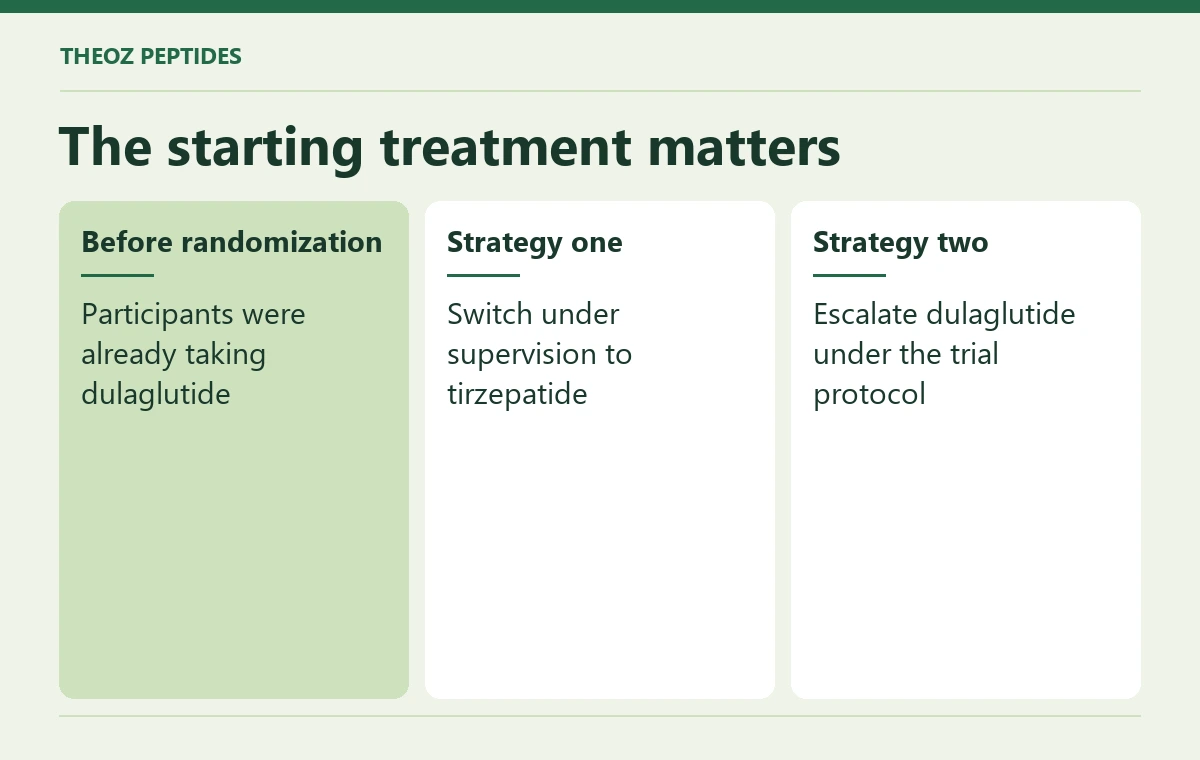
| The starting treatment matters | What to look for |
|---|---|
| Before randomization | Participants were already taking dulaglutide |
| Strategy one | Switch under supervision to tirzepatide |
| Strategy two | Escalate dulaglutide under the trial protocol |
What open-label design adds to the reading
Participants and clinicians knew which strategy was assigned. A laboratory-measured HbA1c has a different sensitivity to expectation than a self-reported symptom, but knowledge of treatment can still influence behaviour, reporting or other aspects of follow-up. The trial's randomization supports a comparison between strategies. Open-label conduct remains a limitation to keep in the research note, particularly when reading secondary outcomes and tolerability reports.
For an appointment in Bali
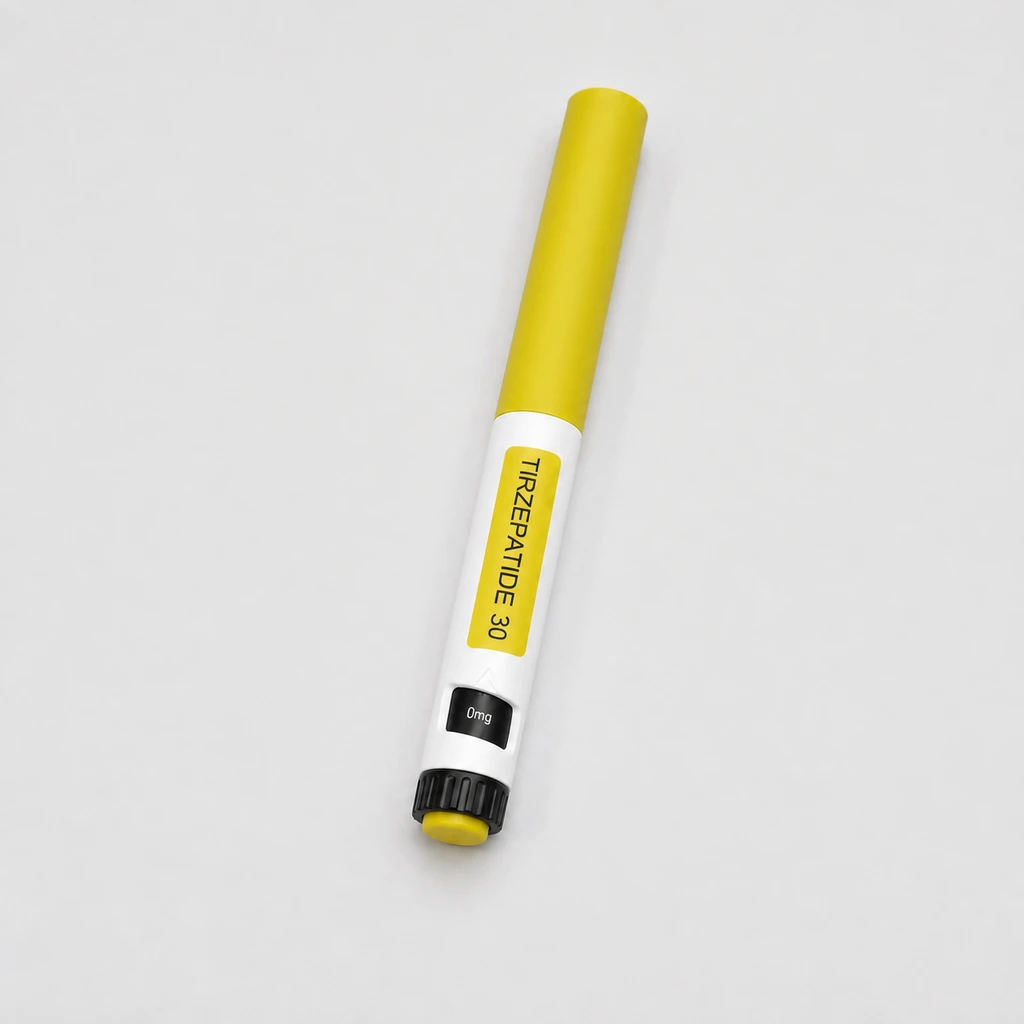
Write down previous medicines, durations, dated HbA1c results, reasons for changes, other diabetes treatments and any adverse effects. Ask whether the comparison resembles the clinical decision you actually face. A retailer can describe a 30 mg or 60 mg tirzepatide presentation. It cannot determine that a switch is medically appropriate or supply a switching schedule. The paper is informative because it compares concrete treatment histories rather than ranking two names in the abstract.