Four arms, two hormones: reading a growth hormone factorial trial
When a trial gives some participants two hormones and others only one, which one caused an observed change? A four-arm study in healthy older adults makes…
When a trial gives some participants two hormones and others only one, which one caused an observed change? A four-arm study in healthy older adults makes that question visible. The answer is not automatically the ingredient a Bali article happens to be advertising.
Draw a two-by-two grid
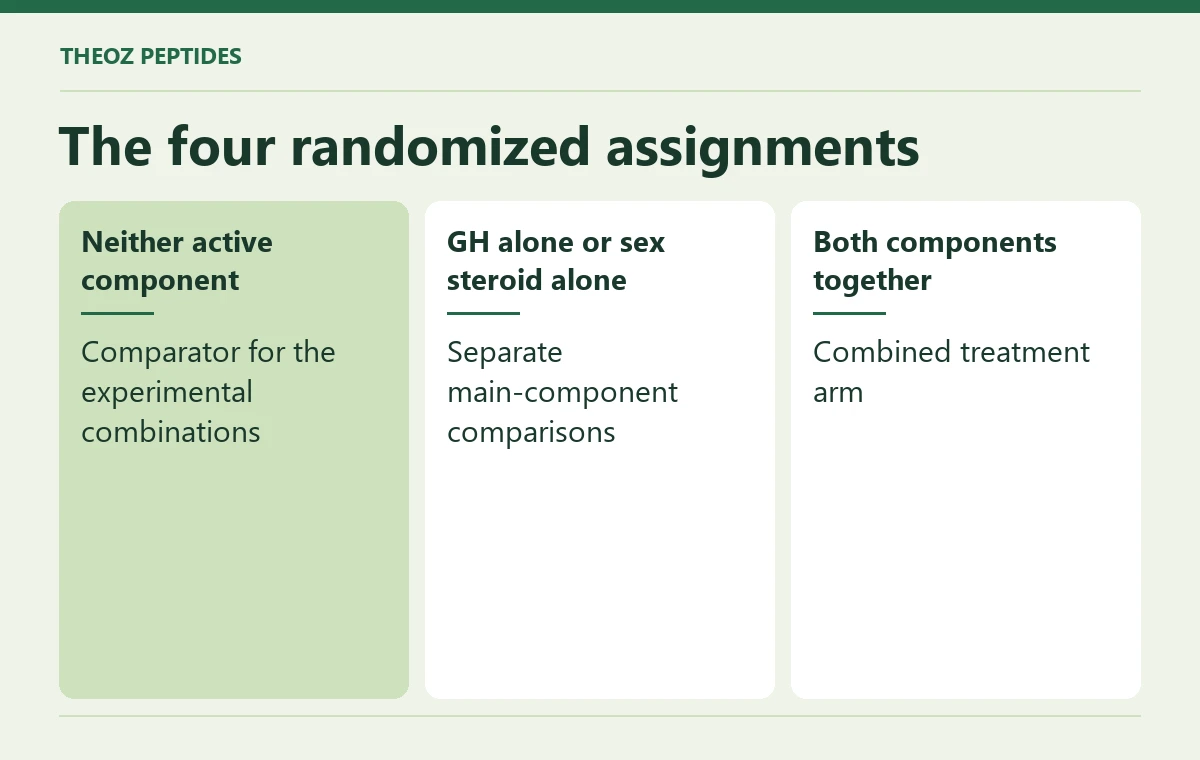
The randomized growth hormone and sex steroid study assigned participants to growth hormone, a sex steroid, both or corresponding placebo conditions. In this design the four cells preserve information about the components independently and in combination. Since the sex-steroid regimens differed by sex, the report also needs to be interpreted with its population and sex-specific results intact. A combined-treatment arm is not a direct observation of what GH alone does.
Separate body composition, strength and adverse events
The investigators measured lean mass, fat mass, strength, cardiovascular endurance and adverse effects. Changes in composition need not translate into changes in a functional endpoint. The authors reported frequent adverse effects, including important glucose problems, and did not endorse these interventions as routine anti-aging treatment. An account that copies an encouraging lean-mass result and removes both the functional and adverse outcomes gives an incomplete view of the experiment.
| The four randomized assignments | What to look for |
|---|---|
| Neither active component | Comparator for the experimental combinations |
| GH alone or sex steroid alone | Separate main-component comparisons |
| Both components together | Combined treatment arm |
What an interaction would mean
The effect of GH might be similar with and without the other assigned component, or it might differ. That difference is an interaction question. Simply noting that results reached statistical significance in one small arm and not another does not establish an interaction. Look for a direct comparison and its uncertainty. The contribution of two interventions is not necessarily the sum of two isolated changes.
Use the grid when reading a product claim
If a newsletter says growth hormone improved a particular outcome, identify the arm, participant group, comparator and measured function before accepting the wording. A reader in Bali considering medical questions about adult GH deficiency faces a separate diagnosis with its own specialist clinical guidance. A trial in healthy older adults and a catalogue entry for somatropin cannot establish personal eligibility or replace assessment for symptoms.