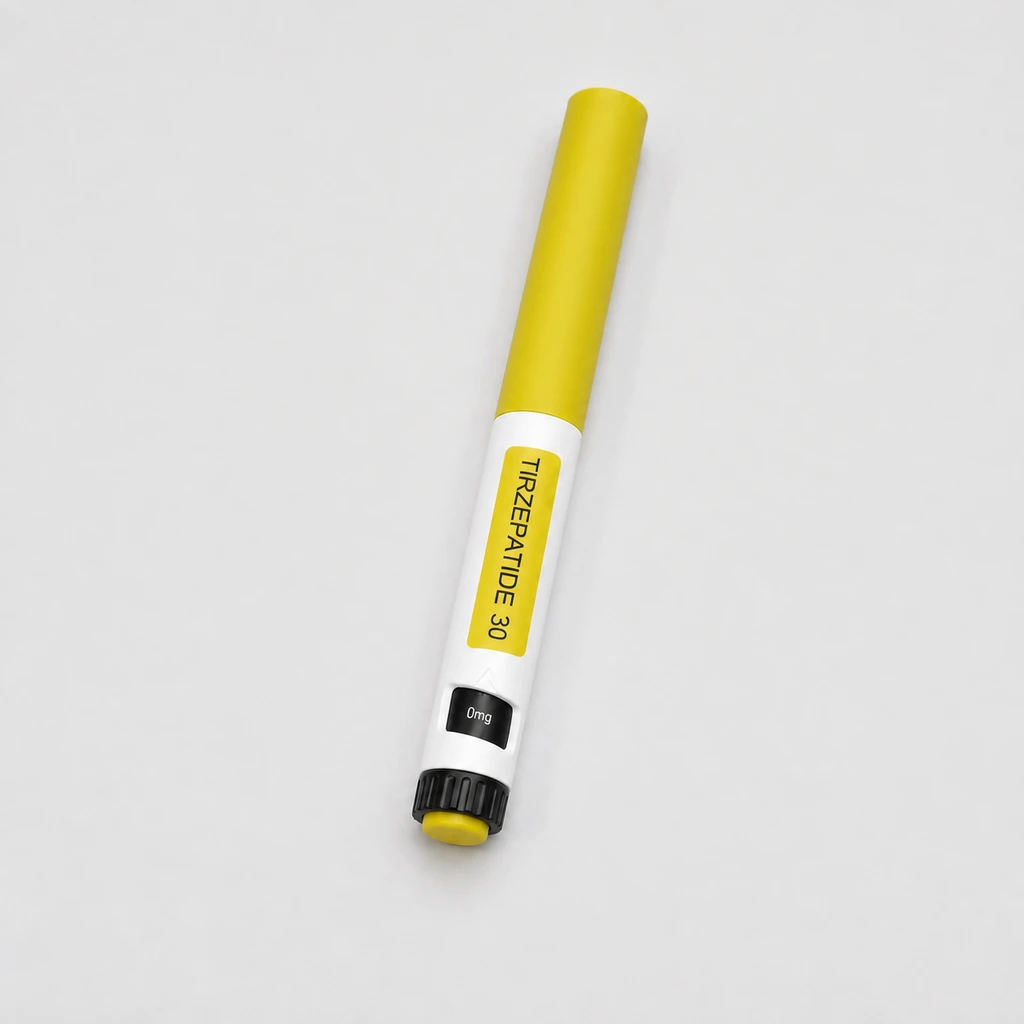
Tirzepatide in hepatic impairment: what the Child–Pugh pharmacokinetic study tested
A paper about a medicine in liver disease can ask one of two nearly opposite questions.
A paper about a medicine in liver disease can ask one of two nearly opposite questions. Does the medicine change the condition of the liver, or does the liver condition change the body's handling of the medicine? A single-exposure tirzepatide study asked the second question.
How groups were defined
The hepatic-impairment pharmacokinetic study grouped participants according to the severity of hepatic impairment, using Child–Pugh classification, and included a comparison group with normal hepatic function. This classification groups clinical and laboratory features; it is not the same thing as one mildly raised liver enzyme or an ultrasound description of fatty liver. A person in Bali cannot infer their study group from one number on a screening panel.
What pharmacokinetics looks for
Investigators measured the concentration of tirzepatide over time and compared exposure patterns after the study intervention. Peak concentration and area under a concentration–time curve describe different aspects of that pattern. The researchers found broadly similar pharmacokinetics across the groups studied. This is a statement about measured drug exposure in that experiment. It cannot show whether liver fat, inflammation, fibrosis or clinical symptoms improved.
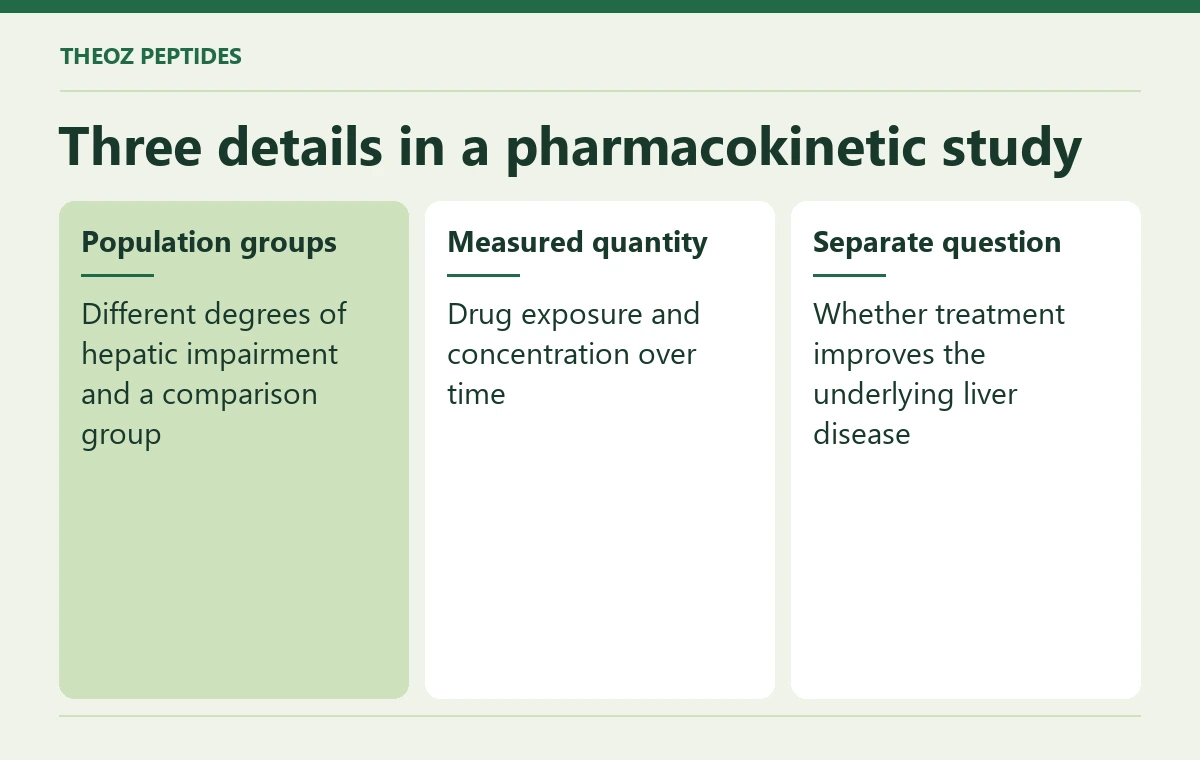
| Three details in a pharmacokinetic study | What to look for |
|---|---|
| Population groups | Different degrees of hepatic impairment and a comparison group |
| Measured quantity | Drug exposure and concentration over time |
| Separate question | Whether treatment improves the underlying liver disease |
What a single-exposure design leaves unanswered
Long-term benefits, interactions in complex illness and uncommon adverse events require other designs and larger populations. A small group with hepatic impairment cannot represent every possible combination of liver disease, kidney disease, nutrition or other medicines. Do not turn the researchers' pharmacokinetic interpretation into a personal adjustment or a blanket assurance about a locally supplied product.
A useful question for a Bali clinician
Bring the documented diagnosis, original test reports and complete treatment list. Ask whether the main issue is how an existing condition affects drug handling, whether a medicine is appropriate at all or whether an outcome is being monitored. These are different clinical decisions. A commercial tirzepatide listing identifies a presentation. It does not identify a Child–Pugh class, replace product-specific prescribing information or turn exposure data into evidence of liver healing.