Why a head injury can lead to pituitary follow-up months later
A person recovering in Bali after a head injury may hear about the pituitary gland for the first time at a follow-up visit.
A person recovering in Bali after a head injury may hear about the pituitary gland for the first time at a follow-up visit. Fatigue, changes in mood and reduced capacity can have multiple causes after an injury. Recognizing a possible endocrine contribution does not identify it as the cause or establish a need for growth hormone.
Why timing matters
The British Neurotrauma Group guidance distinguishes immediate management from later assessment of pituitary dysfunction after traumatic brain injury. Acute illness and treatment can affect hormone measurements. The appropriate time, tests and need for referral depend on the injury, clinical course and symptoms. A result obtained in hospital during acute illness and one obtained after recovery do not necessarily answer the same question.
What a useful recovery record contains
Keep the injury date, emergency or admission summary, imaging reports if available, discharge guidance and a timeline of persistent or changing symptoms. Note which clinician is coordinating follow-up. A person arriving in Bali after treatment elsewhere can save time by bringing these original records rather than trying to reconstruct injury severity from a scar or a broad recollection of “concussion.” New severe or worsening neurological symptoms need appropriate urgent care.
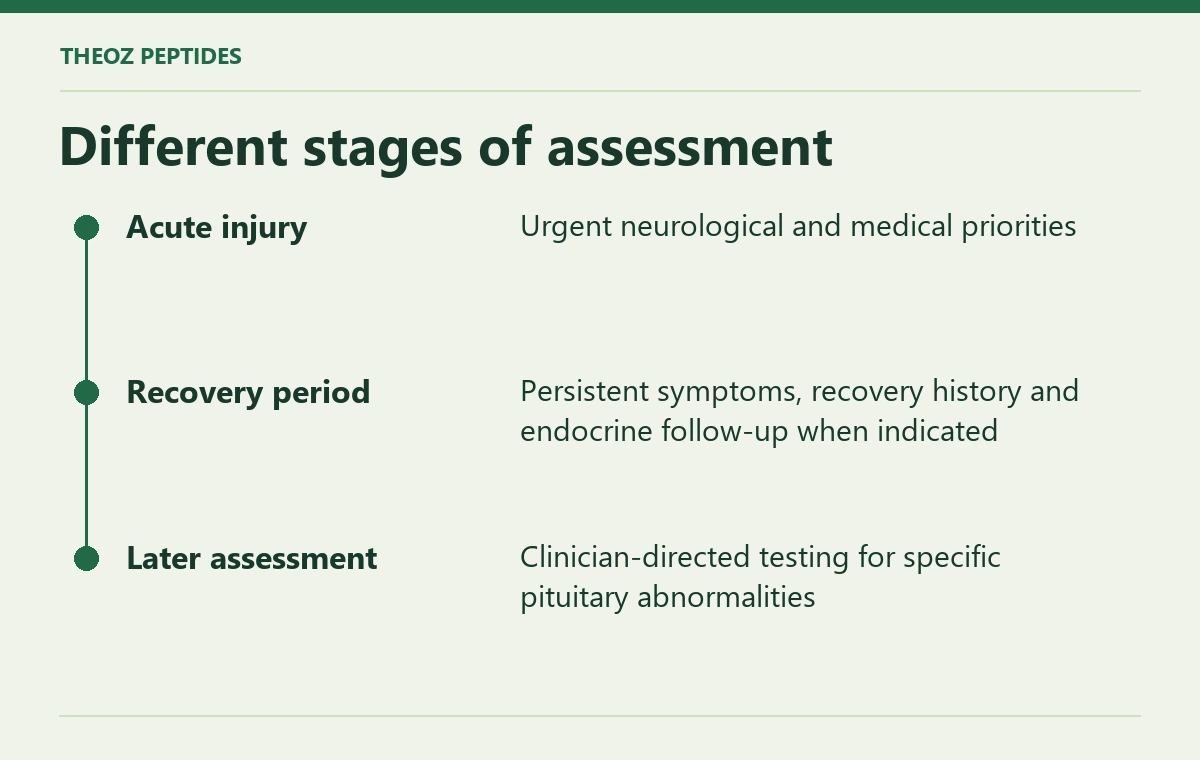
| Different stages of assessment | What to look for |
|---|---|
| Acute injury | Urgent neurological and medical priorities |
| Recovery period | Persistent symptoms, recovery history and endocrine follow-up when indicated |
| Later assessment | Clinician-directed testing for specific pituitary abnormalities |
What growth hormone evidence can and cannot do
The adult GH deficiency guideline places diagnosis within broader endocrine assessment and supports appropriate testing in the right clinical setting. A single nonspecific symptom is not a GH stimulation test. A history of brain injury can justify clinical consideration without proving deficiency, and another pituitary hormone problem may need attention first. A retail somatropin presentation supplies neither a diagnosis nor the correct sequence of care.
How to use the information locally
Ask the treating clinician whether follow-up for pituitary dysfunction was recommended and what findings would change that plan. If different facilities are involved, keep the tests already performed, their timing and the question they were intended to answer. This allows the next professional to distinguish routine recovery monitoring from a specific endocrine evaluation. The purpose is a coherent recovery plan, not a product choice based on a symptom shared by many conditions.