Did visceral-fat changes last after tesamorelin was stopped in the extension trial?
A follow-up study can give a group the same label as before or switch its treatment halfway through.
A follow-up study can give a group the same label as before or switch its treatment halfway through. Without the first-period history, an extension result is easy to misread. A tesamorelin study in people with HIV-associated abdominal fat accumulation is a practical example for Bali readers comparing lasting effects.
Trace the arrow between periods
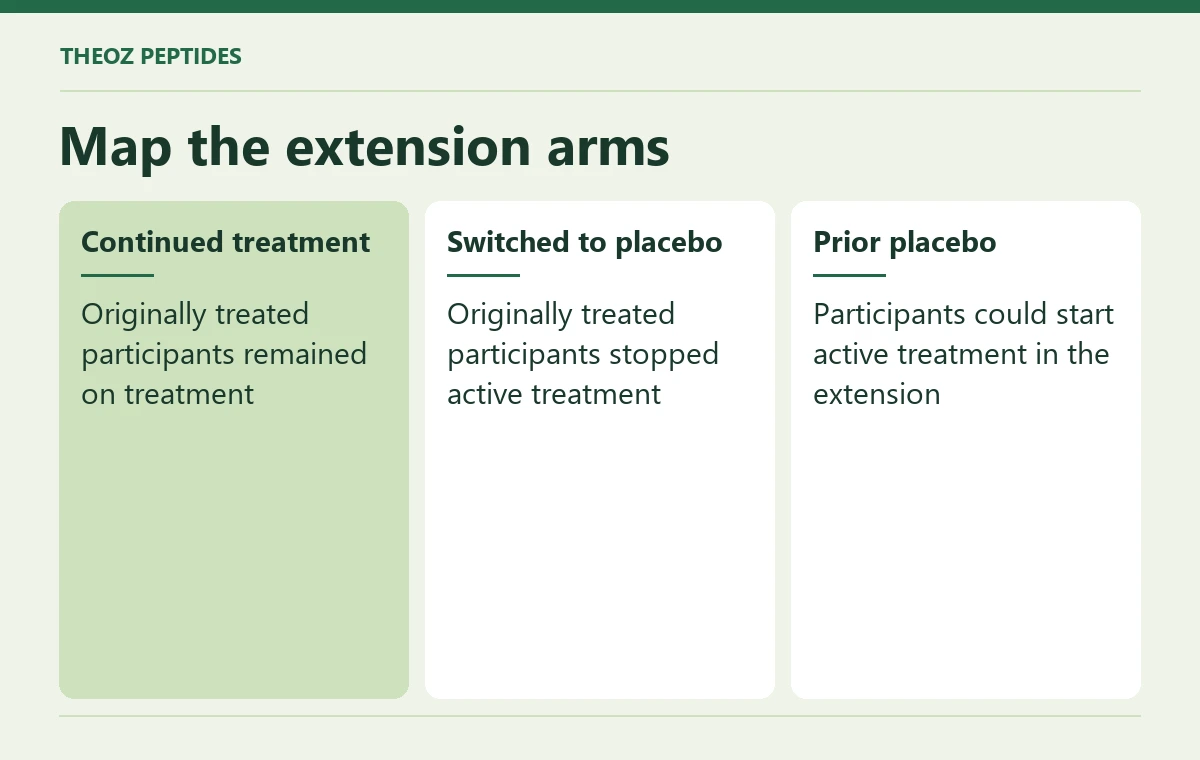
The 52-week extension report followed an initial treatment period and a later extension. Some participants initially receiving tesamorelin continued it; others switched to placebo. Participants initially on placebo could receive active treatment in the later period. Two people described as “on tesamorelin” at the final visit can therefore have different durations of exposure and different starting points. Draw the sequence before interpreting the last measurement.
What persisted, in which group?
The investigators reported that the reduction in visceral adipose tissue was maintained in participants continuing treatment over the full period, while the benefit was not sustained after treatment ended. That wording concerns measured VAT in a defined study population. It does not quantify how any Bali shopper's waist or symptoms would change. Follow-up duration also limits how far beyond the last recorded visit one can reasonably speak.
| Map the extension arms | What to look for |
|---|---|
| Continued treatment | Originally treated participants remained on treatment |
| Switched to placebo | Originally treated participants stopped active treatment |
| Prior placebo | Participants could start active treatment in the extension |
Why extension participants can differ
A person entering an extension has stayed in contact with the study through an earlier phase. Some original participants may be missing by that point. Note the numbers entering each period and the analysis used when measurements are missing. A final-visit average should not be read as the experience of everybody originally enrolled, especially if discontinuation was related to response or tolerability.
Use the two-period record at an appointment
Bring dates for relevant treatments and scans rather than a statement that a previous intervention “worked for a year.” Ask whether the result was maintained during treatment, assessed after stopping or inferred without a later measurement. Ending, starting or changing a prescribed therapy is a separate clinical decision. The research record and a local pen specification do not supply personal instructions.