Why SURPASS-4 estimated kidney filtration twice
Creatinine-based estimates of kidney function can be affected by muscle mass.
Creatinine-based estimates of kidney function can be affected by muscle mass. That matters when studying a treatment associated with weight change. A post hoc SURPASS-4 analysis used cystatin C as a second way to examine the kidney signal. The question is more precise than asking whether tirzepatide “helps kidneys.”
Why use two markers?
Creatinine and cystatin C arise from different biological processes. Equations use them to estimate glomerular filtration rate; neither is a direct measurement of flow through a person's kidneys. Lean mass can influence serum creatinine, which raises an alternative explanation when someone loses weight. A second marker helps researchers test how dependent a conclusion is on the first measurement. It still has its own biological and analytical limitations.
What the comparison showed
In the SURPASS-4 analysis, adults with type 2 diabetes and high cardiovascular risk received tirzepatide or insulin glargine. Over one year, the smaller estimated filtration decline in the tirzepatide arm was seen with both creatinine- and cystatin C-based estimates. Change in these estimates did not correlate with weight change in that analysis. These are group-level findings in a post hoc investigation. They are not a personal prediction and do not establish what caused a particular unexpectedly high creatinine result.
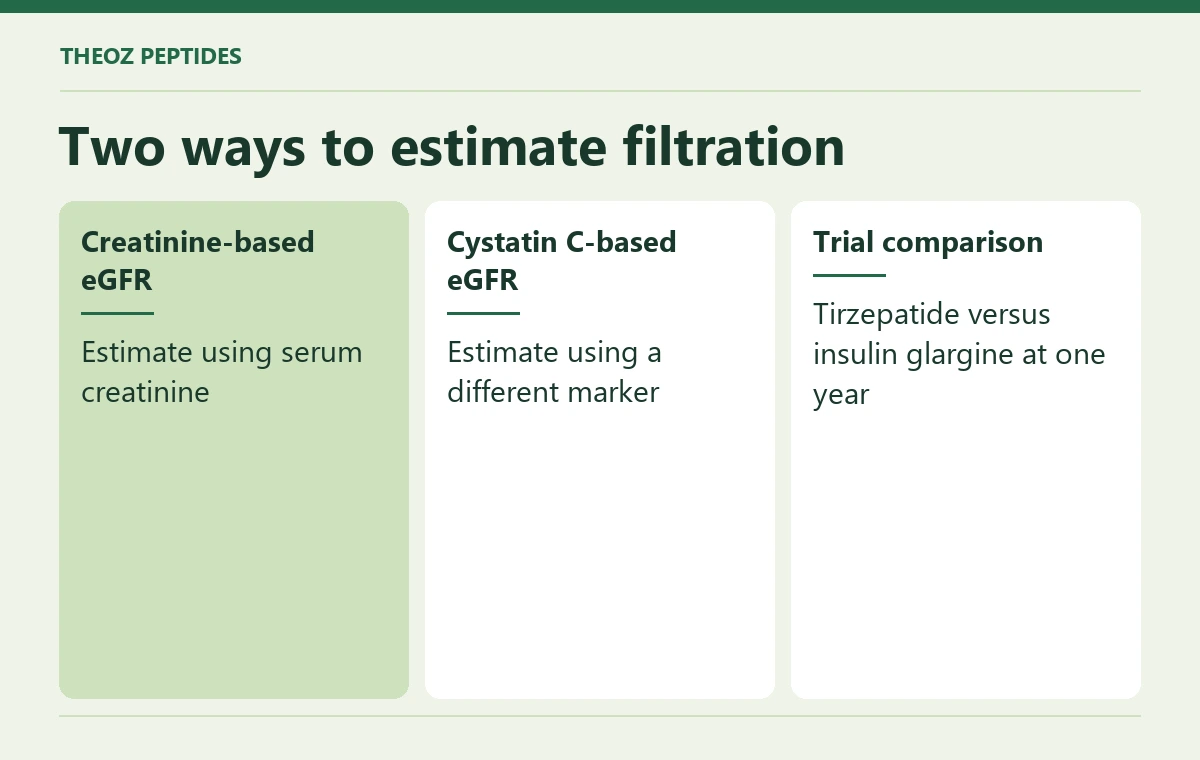
| Two ways to estimate filtration | What to look for |
|---|---|
| Creatinine-based eGFR | Estimate using serum creatinine |
| Cystatin C-based eGFR | Estimate using a different marker |
| Trial comparison | Tirzepatide versus insulin glargine at one year |
Read a local laboratory report carefully
Your Bali report may show only creatinine and an equation-based eGFR. Another test may include cystatin C or a combined equation. Copy the marker, unit, equation if printed, and dates before comparing trends. Compare urine albumin separately. NIDDK's patient information distinguishes the question of how well kidneys filter from evidence of albumin passing into urine.
A practical question for the clinician
If a significant change in body composition accompanied a surprising result, say so when reviewing the original report. Ask whether the estimate is appropriate for the clinical question and whether another measurement would change the interpretation. A retail tirzepatide pen does not define either the baseline kidney condition or the tests needed. The research is valuable here because it investigated a specific alternative explanation with a second marker.