Retatrutide or setmelanotide in a headline? First identify the obesity being studied
Two medicines can be studied for weight-related outcomes in populations that barely resemble one another.
Two medicines can be studied for weight-related outcomes in populations that barely resemble one another. Setmelanotide research in Bardet-Biedl syndrome and Alström syndrome is an example. A Bali reader comparing its name with retatrutide should start with the condition that made each participant eligible.
Why the rare syndrome matters
The phase 3 setmelanotide investigators studied a melanocortin-4 receptor agonist in people with defined rare syndromes associated with obesity. The paper included a blinded placebo-controlled period and an open-label period. The scientific question concerned a pathway relevant to selected disorders and outcomes including weight or hunger. A named syndrome is an important eligibility boundary. Body weight or appetite alone cannot establish its presence.
What retatrutide studied separately
The phase 2 retatrutide obesity trial investigated a different molecule acting at GIP, GLP-1 and glucagon receptors in its own eligible population. It had its own randomization, follow-up and outcome definitions. The two publications did not assign the same group of patients to retatrutide versus setmelanotide. Putting a percentage from each on a bar chart cannot establish which agent is “stronger,” particularly if ages, eligibility or methods for assessing hunger differ.
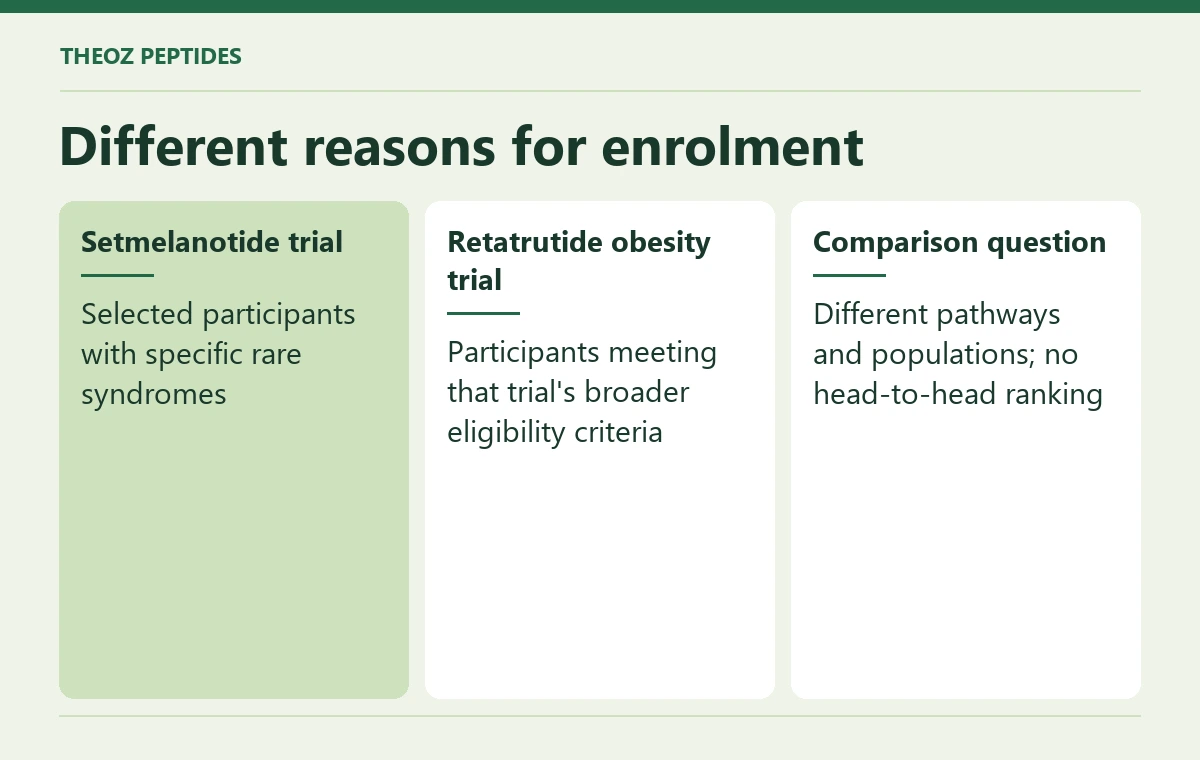
| Different reasons for enrolment | What to look for |
|---|---|
| Setmelanotide trial | Selected participants with specific rare syndromes |
| Retatrutide obesity trial | Participants meeting that trial's broader eligibility criteria |
| Comparison question | Different pathways and populations; no head-to-head ranking |
A concrete sorting exercise
If a summary says “participants with obesity lost weight,” add the syndrome or diagnostic criteria, age range, intervention period and comparator. Then note whether the reported change came from the blinded or open-label period. The sentence may now refer to a far smaller group than the original headline suggested. That lost specificity is the main reason a result can be misapplied to a person who simply shares one visible characteristic.
How to use this comparison in Bali
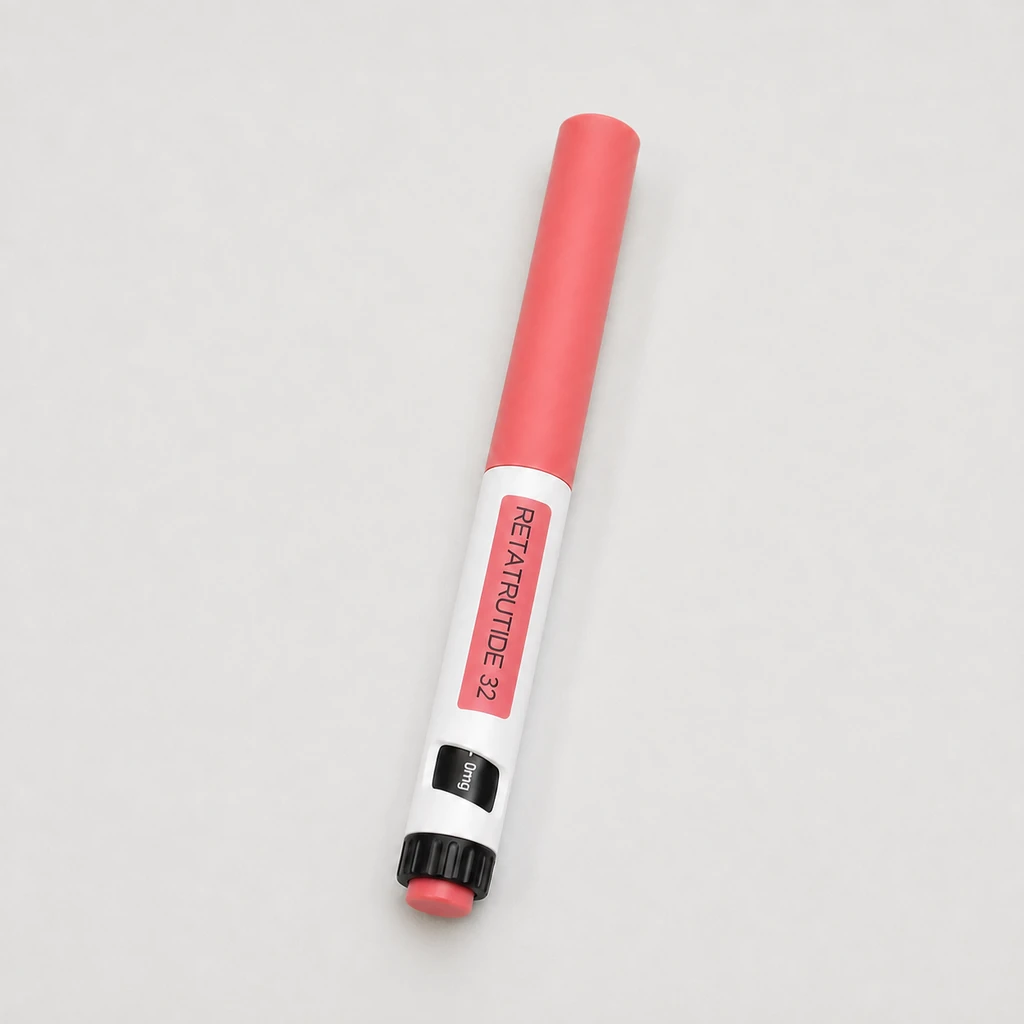
A clinician can evaluate early-onset symptoms, family history or a concern about a rare disorder and whether specialist assessment is warranted. Do not infer a diagnosis or select a treatment based on a similarity in medicine names. The retatrutide listing supplies the pack's labelled presentation. Research into a different molecule in a rare genetic context supplies neither a direct comparison nor a personalized recommendation.