Bone turnover, density and fractures in growth hormone deficiency: three separate outcomes
Bone can be actively remodelling without an immediate rise in measured density.
Bone can be actively remodelling without an immediate rise in measured density. That makes reports about growth hormone replacement in adults with confirmed deficiency surprisingly easy to misinterpret. A biological signal that bone cells are more active is not yet a demonstration that fewer people will fracture a hip.
Start with the study population
The study of bone mass in adult-onset GH deficiency followed people with documented deficiency during replacement treatment. Its results are not a study of unselected adults with low bone density, an older person with a fracture or someone seeking an athletic advantage in Bali. Record how deficiency was established, what other pituitary treatment was involved and which skeletal measurements were actually taken.
What does the clock allow?
The investigators discussed the response at six and twelve months and the need for longer follow-up. Bone formation and resorption operate over time. A turnover marker can change before a density measurement shows a clear gain, but that does not guarantee a later gain. Likewise, no short-term improvement in bone mass cannot settle every longer-term question. The reported study time points should remain explicit rather than being collapsed into “improves bones.”
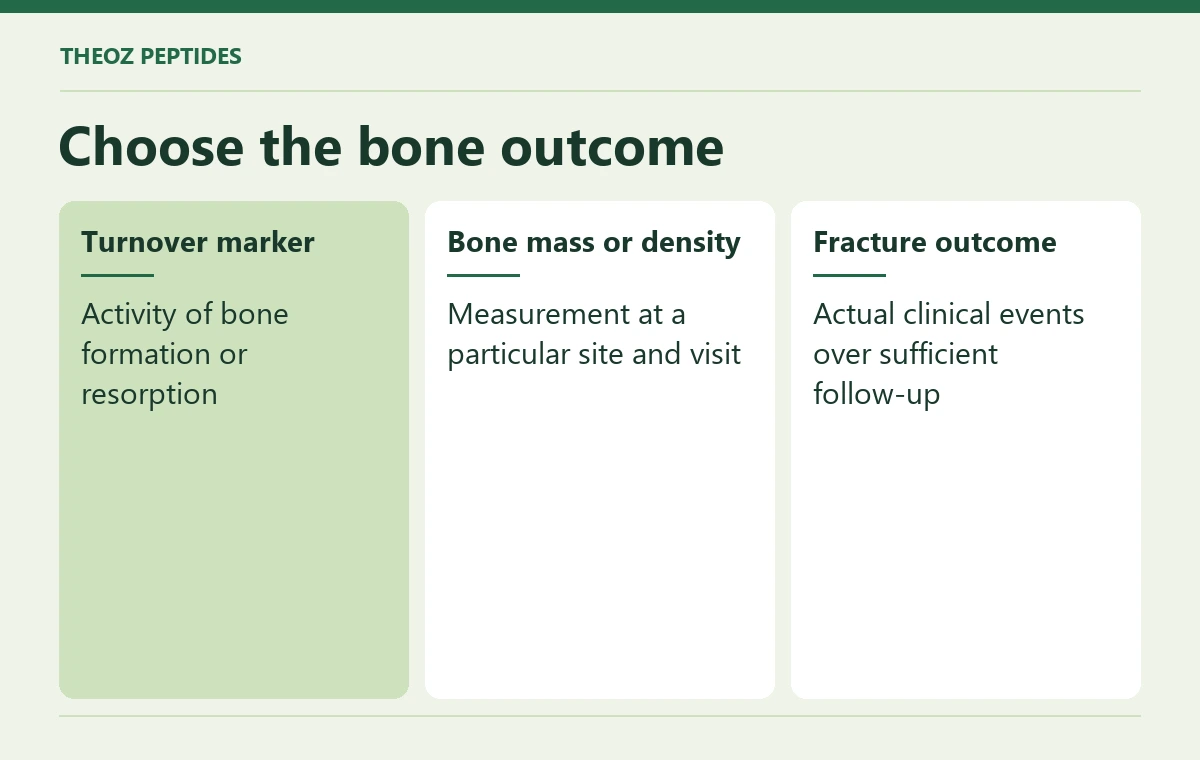
| Choose the bone outcome | What to look for |
|---|---|
| Turnover marker | Activity of bone formation or resorption |
| Bone mass or density | Measurement at a particular site and visit |
| Fracture outcome | Actual clinical events over sufficient follow-up |
Which endpoint would answer the patient's question?
If the question is fracture prevention, researchers need an appropriate population, a comparator, enough events and sufficiently long observation. If the question is a change in density, site-specific measurements made by comparable methods matter. A result at one skeletal site is not interchangeable with every other site, and body-composition changes do not automatically demonstrate a structural bone benefit.
Bring the right records to a Bali appointment
Keep prior fractures, imaging dates and sites, prescribed medicines and the original endocrine diagnosis together. Ask which outcome the clinician is monitoring and how they will judge change against measurement variation. The adult growth hormone guideline deals with GH replacement in a clinical context. A somatropin product label identifies a preparation, but it does not reveal an individual's fracture risk or replace assessment of other causes of bone fragility.