Oral or transdermal oestrogen: why the route mattered in a growth hormone study
An IGF-I result can change even when the recorded growth hormone regimen stays the same.
An IGF-I result can change even when the recorded growth hormone regimen stays the same. One clinical study focused on the route of another prescribed hormone, oestrogen. The finding is relevant to a Bali appointment where a change from tablets to a patch may be mentioned only as an administrative detail.
What the researchers compared
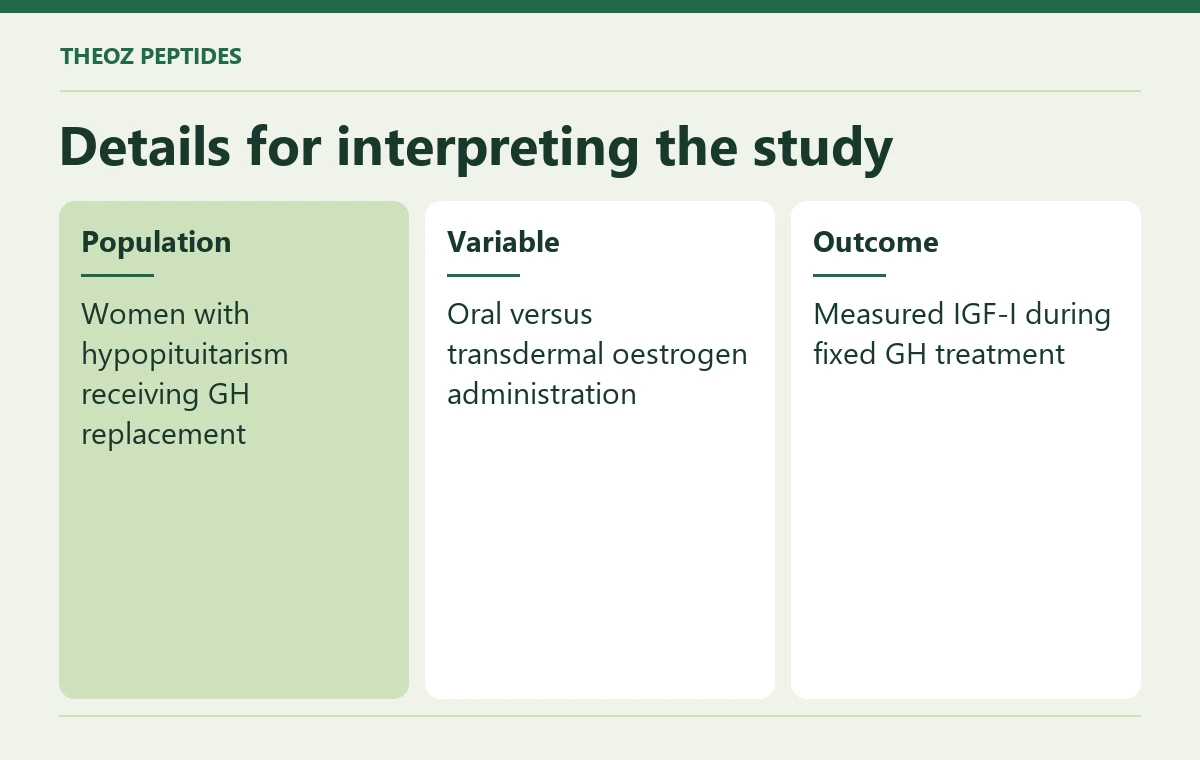
The route-dependent oestrogen study examined IGF-I during fixed growth hormone replacement in women with hypopituitarism. Oral and transdermal delivery expose the liver differently, and the investigators observed route-related differences in IGF-I. The result concerns this selected population and its actual treatment context. It does not establish the same numerical effect in all women or make a particular route universally preferable.
Why a list of ingredient names is insufficient
A medication list that says only “oestrogen” loses the variable under study. Retain the product, route and dates of changes, alongside original IGF-I reports and laboratory intervals. If two changes happened close together, a before-and-after comparison cannot reliably assign the entire difference to one factor. Knowing which treatment remained fixed in a controlled study is different from assuming that everything else remained fixed in an individual case.
| Details for interpreting the study | What to look for |
|---|---|
| Population | Women with hypopituitarism receiving GH replacement |
| Variable | Oral versus transdermal oestrogen administration |
| Outcome | Measured IGF-I during fixed GH treatment |
What a laboratory trend can contribute
Repeated results using a comparable method can help a clinician assess the pattern, but the result should be interpreted with age, clinical status and prescribed treatment. Symptoms, adverse effects and other pituitary hormones can also matter. The Endocrine Society's adult GH deficiency guidance places monitoring in this broader setting. A change in a laboratory value is a reason for review rather than a stand-alone instruction to alter treatment.
A concrete handover question
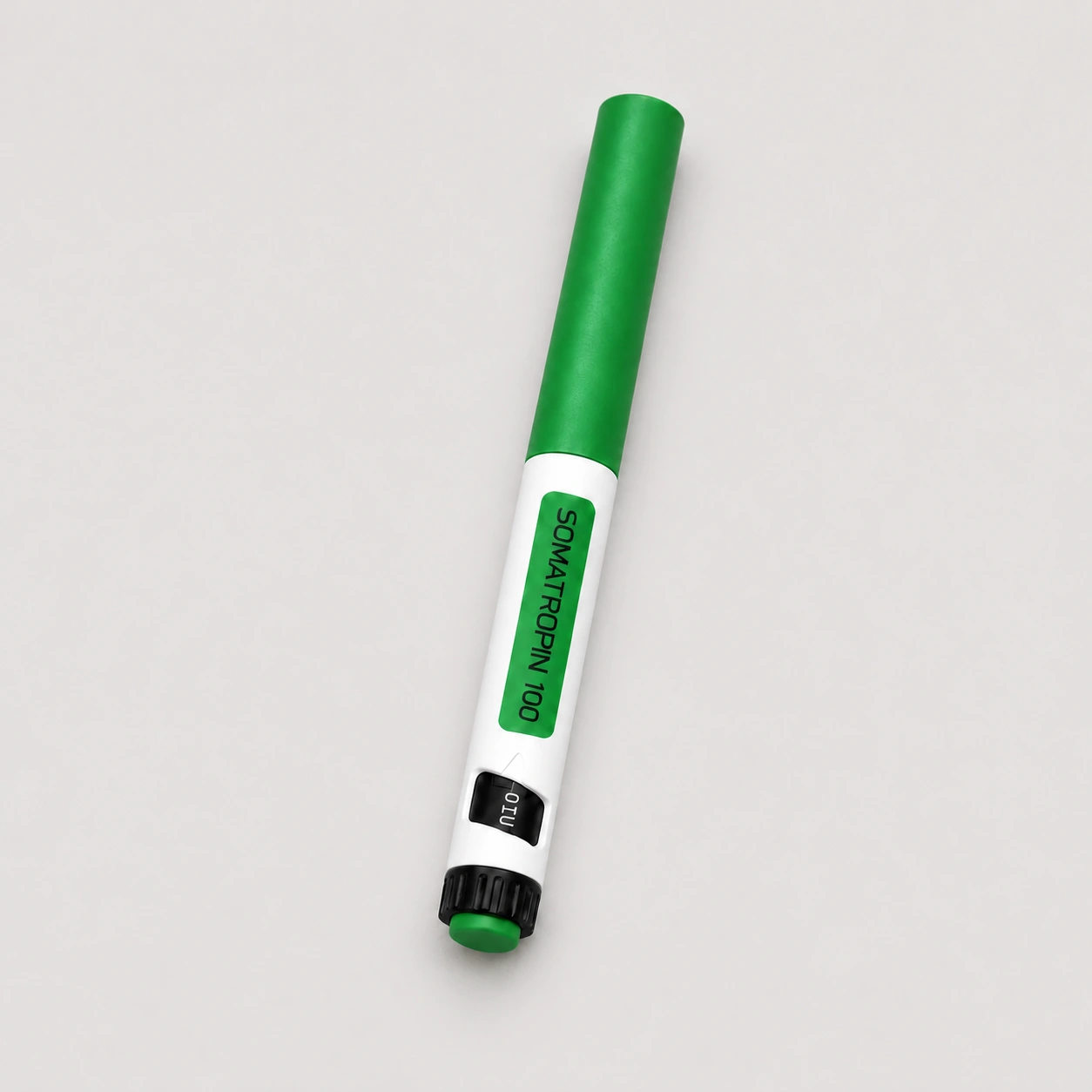
If a prescriber in one country changed an oestrogen formulation and a Bali clinic later reviews GH treatment, ask whether the route change was recorded before interpreting the IGF-I trend. Bring the original labels and dates. The 100 IU on a somatropin catalogue entry gives a labelled quantity. It gives no information about the concurrent hormone route that influenced the research result.