When the laboratory procedure changes the NAD+/NADH ratio
The ratio between oxidized NAD+ and reduced NADH can change during sample handling.
The ratio between oxidized NAD+ and reduced NADH can change during sample handling. That makes a technical point immediately relevant to anyone in Bali offered a single number as a measure of “cellular energy.” Before comparing ratios, establish what was collected and how the laboratory prevented the two forms from changing during preparation.
Where measurement error can enter
A primary study of redox cofactor extraction evaluated how sample preparation affects quantification of NAD-related metabolites. Different methods can permit interconversion or degradation and change the measured ratio before the analytical instrument reports a result. The study examined laboratory procedures. Its practical message for a reader is to ask about a validated method, not to perform chemical sample preparation at home.
Why an accurate number can answer the wrong question
A laboratory can report a highly repeatable value for a particular material. A whole-blood ratio, plasma result and tissue-specific measurement are still different. The denominator matters as well: a ratio can change when its numerator changes, its denominator changes or both move. Without the component measurements, it may be impossible to distinguish these explanations.
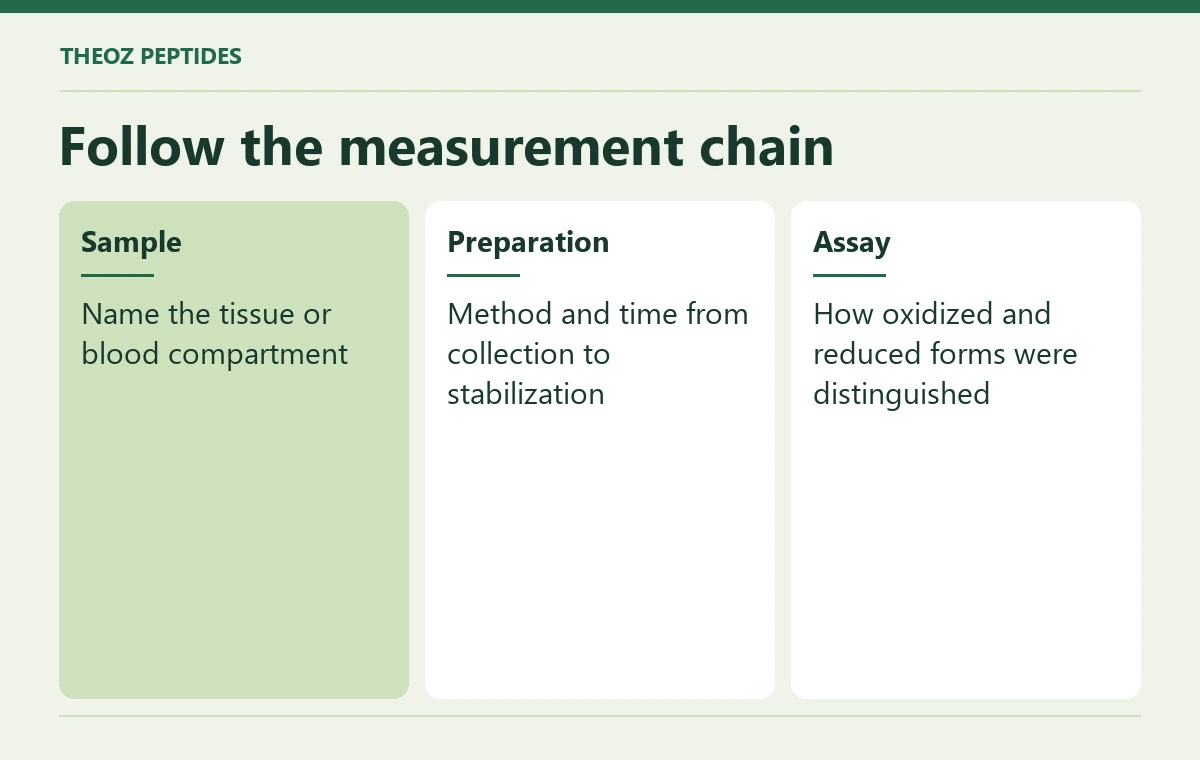
| Follow the measurement chain | What to look for |
|---|---|
| Sample | Name the tissue or blood compartment |
| Preparation | Method and time from collection to stabilization |
| Assay | How oxidized and reduced forms were distinguished |
Read two reports as separate experiments
Ask for the laboratory name, specimen, method, unit or ratio definition, processing time and the date relative to any clinical event. A repeat performed by a different lab using another specimen cannot be assumed comparable. A study of preanalytical factors in extracellular NAD measurement gives another example of researchers explicitly investigating handling conditions rather than assuming every result is interchangeable.
Where a retail product fits
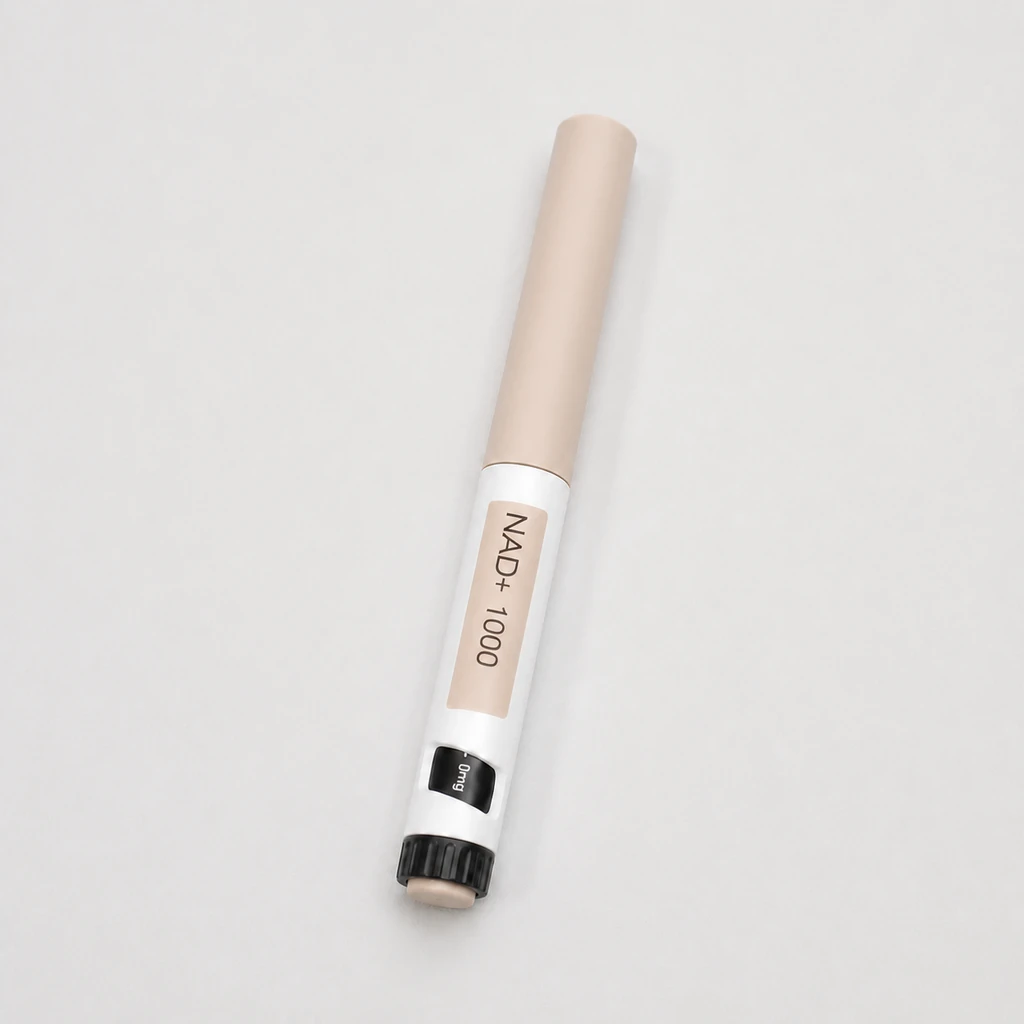
Theoz's NAD+ presentation identifies the nominal material in a product and its labelled total. It does not specify the redox state of someone's muscle, the cause of fatigue or how an external preparation would change a particular assay. A clinician considering a diagnostic question can say whether an available test is validated for it. A persuasive laboratory claim begins with a well-preserved sample and a meaningful comparison, not a large number on a graph.