Why gallstones, biliary obstruction and gallbladder surgery are different research outcomes
A safety headline can say “gallbladder problems increased” without saying whether anyone had stones, inflammation, obstruction or surgery.
A safety headline can say “gallbladder problems increased” without saying whether anyone had stones, inflammation, obstruction or surgery. A secondary analysis of LEADER sorted clinical reports into more specific categories. For Bali readers of incretin research, its classification is more useful than a single vague word.
What the investigators reviewed
The LEADER gallbladder and biliary analysis compared liraglutide with placebo in adults with type 2 diabetes at high cardiovascular risk. Investigators examined acute gallbladder or biliary disease, including distinct event categories, and the occurrence of cholecystectomy. They found a higher risk of these events with liraglutide in this setting. The study medicine was liraglutide, not tirzepatide or retatrutide. The comparison deserves to be cited under its actual name.
Why event categories overlap in a person's story
An episode of gallstone-related obstruction might lead to a hospital assessment and subsequent surgery. Those descriptions could all apply to one person. Adding every outcome column together as if each represented a unique human would double-count some experiences. Conversely, a stone discovered incidentally and an episode with complications differ clinically even though both may appear under a broad gallstone heading. Use the paper's case definitions and unit of analysis.
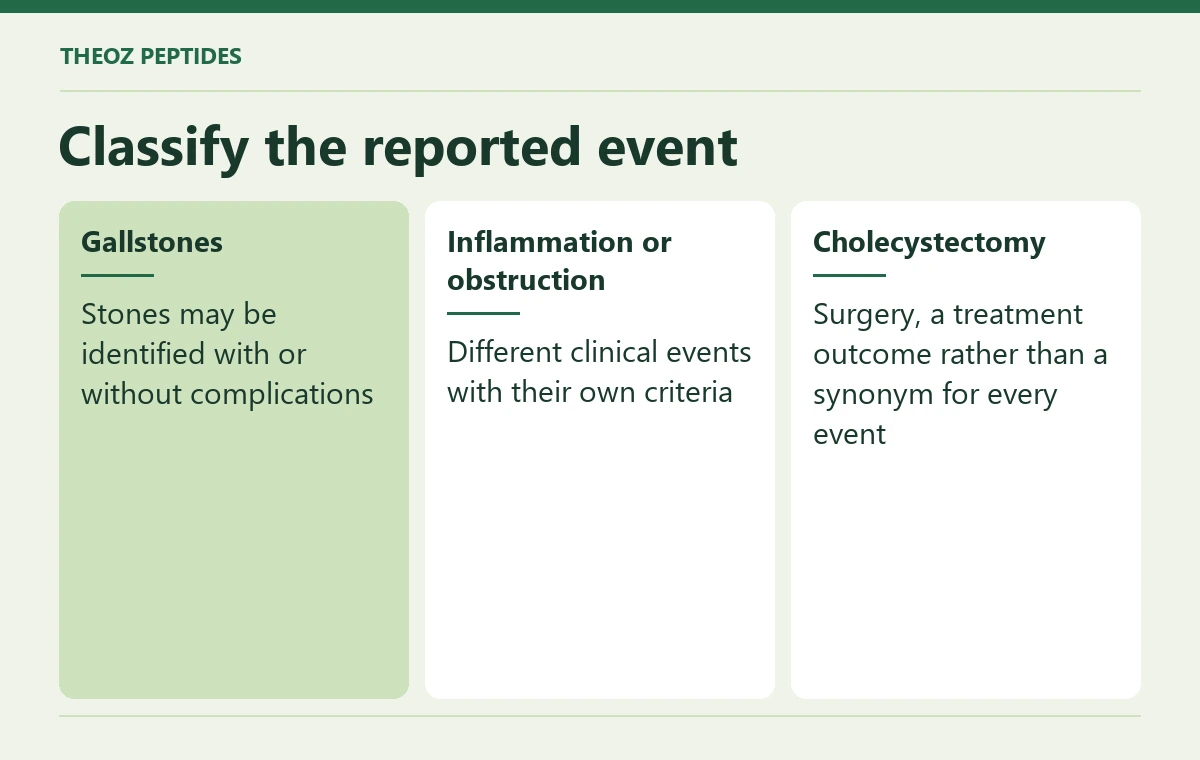
| Classify the reported event | What to look for |
|---|---|
| Gallstones | Stones may be identified with or without complications |
| Inflammation or obstruction | Different clinical events with their own criteria |
| Cholecystectomy | Surgery, a treatment outcome rather than a synonym for every event |
What uncertainty remains
A trial can observe a between-group difference without establishing precisely which mechanism explains every event. Baseline vascular risk, diabetes, changes in body weight, duration of follow-up and how records were reviewed all matter to interpretation. A frequency from this selected population cannot be applied to an individual Bali customer or transferred unchanged between different medicines. Consult the official product information and a clinician for the exact treatment under consideration.
For a medical conversation in Bali
Tell the clinician about any known gallbladder history and describe current symptoms rather than selecting a diagnosis from the event table. Severe or persistent abdominal pain, fever or jaundice warrants prompt medical assessment. The useful research question is which outcome occurred, in whom, on which medicine and under what comparison. Neither a product image nor a general class label can answer all four.