A smaller waist and a better cognitive score: did both change in the tesamorelin trial?
A study can report a clearer change in waist circumference than in a cognitive test.
A study can report a clearer change in waist circumference than in a cognitive test. That is not contradictory. It means different outcomes supplied different evidence. A short-term study of tesamorelin in people with HIV, abdominal obesity and neurocognitive impairment illustrates why readers should resist substituting one for the other.
What the comparison was designed to ask
The investigators compared tesamorelin with standard care in a specific clinical population. They examined cognitive change and waist measurements separately. Waist circumference decreased more with tesamorelin, but the between-group difference in the reported cognitive outcome was not statistically significant. A within-group improvement on repeated testing is not the same as a demonstrated intervention effect against a comparator.
Why repeated testing can look encouraging
People can become more familiar with a test, their health context can change and individual results fluctuate. Random allocation provides a comparison to help interpret those changes. A positive experience reported by one participant is worth listening to clinically, but it cannot determine whether the treatment caused a group difference. Conversely, a non-significant comparison in a small study does not prove there is precisely zero effect in every setting.
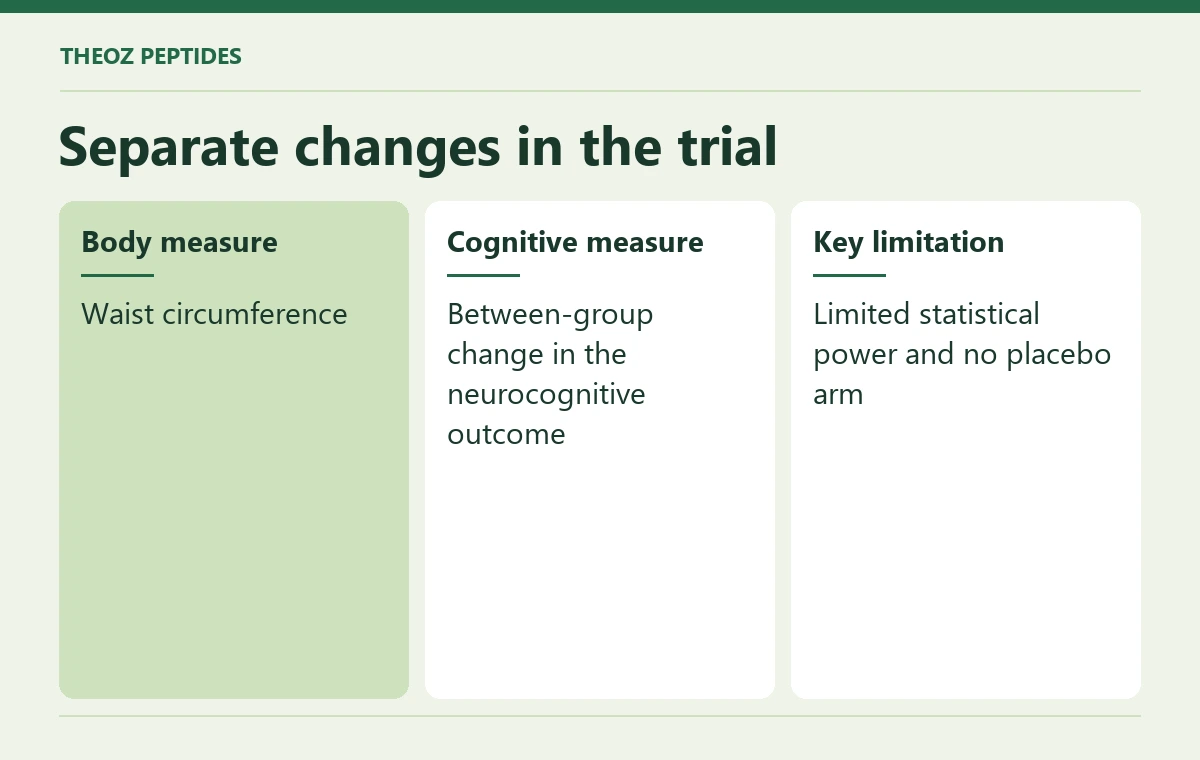
| Separate changes in the trial | What to look for |
|---|---|
| Body measure | Waist circumference |
| Cognitive measure | Between-group change in the neurocognitive outcome |
| Key limitation | Limited statistical power and no placebo arm |
Keep power and masking in view
The authors highlighted insufficient power and the absence of a placebo arm. A confidence interval, group sizes, follow-up duration and how cognitive tests were scored help characterize that uncertainty. A larger, appropriately designed trial could answer a narrower question more precisely. The present study does not support advertising a clear cognitive benefit based on a change in waist alone.
A practical way to use this in Bali
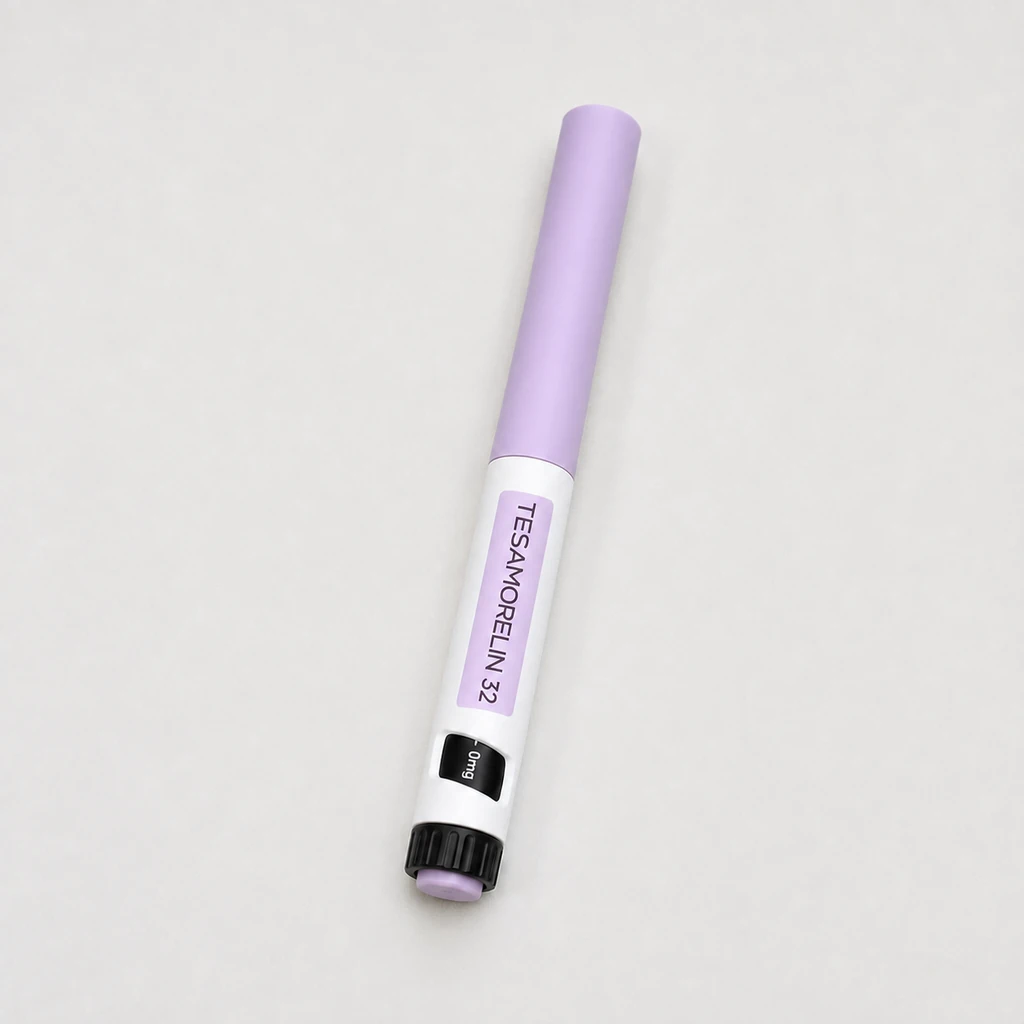
If seeking care for concentration or memory concerns, describe the onset, impact on work or daily activities and other relevant symptoms to the healthcare professional. A body measurement is useful context, not a substitute for a clinical assessment. The 32 mg label on a tesamorelin presentation addresses amount supplied. It does not convert a result in a defined HIV study into a cognitive outcome for an individual customer.