MOTS-c and age: why muscle tissue and blood need separate headlines
A Bali fitness post can say a peptide “falls with age” without naming the tissue.
A Bali fitness post can say a peptide “falls with age” without naming the tissue. Muscle expression, circulating concentration and change after a bout of exercise are three different measurements. For MOTS-c, dropping the sample type can change the meaning of the finding.
What the human tissue study measured
The human skeletal-muscle study in healthy aging men examined muscle expression and its association with myofibre composition. The paper's title itself locates the result in skeletal muscle. An association with which fibres are present could influence a whole-muscle measurement. That observation cannot automatically become a statement about a blood test or about all people of all ages.
Why sampling time changes another question
A separate human study of an acute exercise session measured circulating mitochondrial-derived peptides around exercise. A difference between age groups measured once and a change in the same person immediately around exercise are different designs. Recent physical activity, the time of collection and the tissue tested belong alongside any value. None of these observations alone compares a retail MOTS-c intervention with a control.
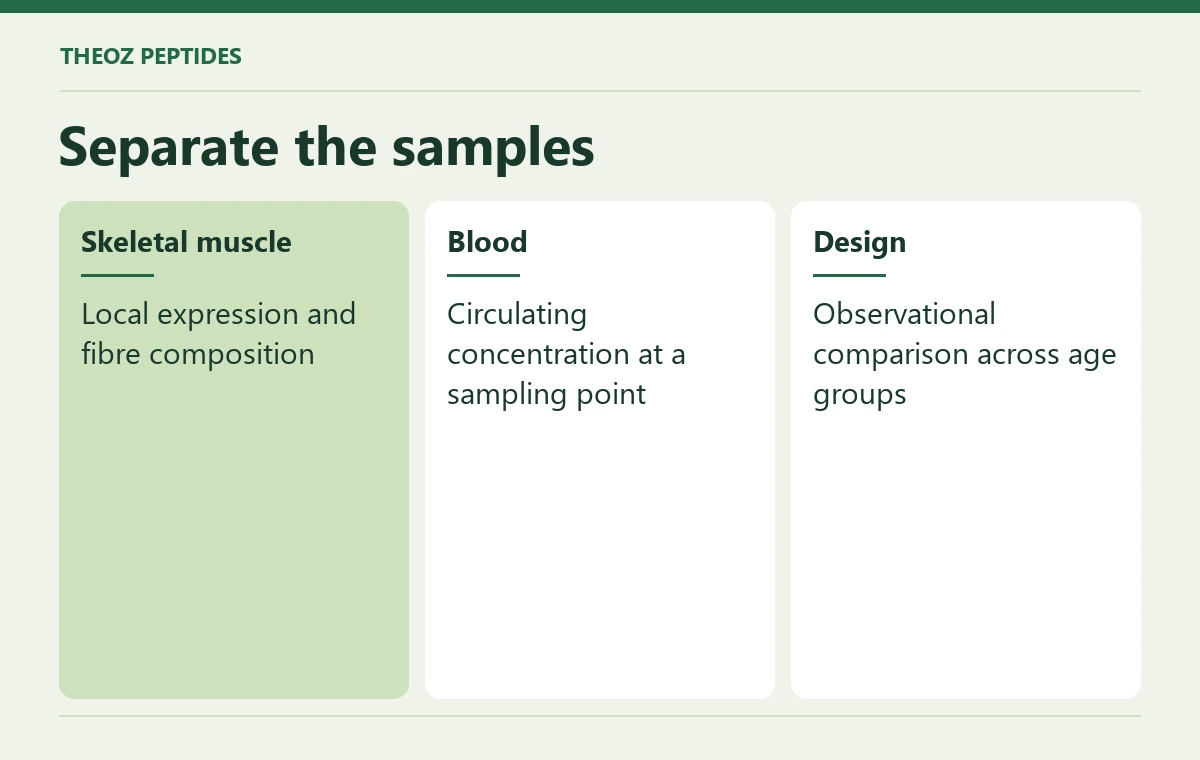
| Separate the samples | What to look for |
|---|---|
| Skeletal muscle | Local expression and fibre composition |
| Blood | Circulating concentration at a sampling point |
| Design | Observational comparison across age groups |
A useful pair of captions
For one chart write “expression in a specified sample of skeletal muscle” and name the group examined. For the other write “circulating measurement before or after the specified exercise” and include the sampling interval. Then ask which chart supports the claim you are reading. A chart showing a molecular difference cannot by itself establish better walking capacity, less fatigue or an effective treatment program.
How to discuss an unexpected result in Bali
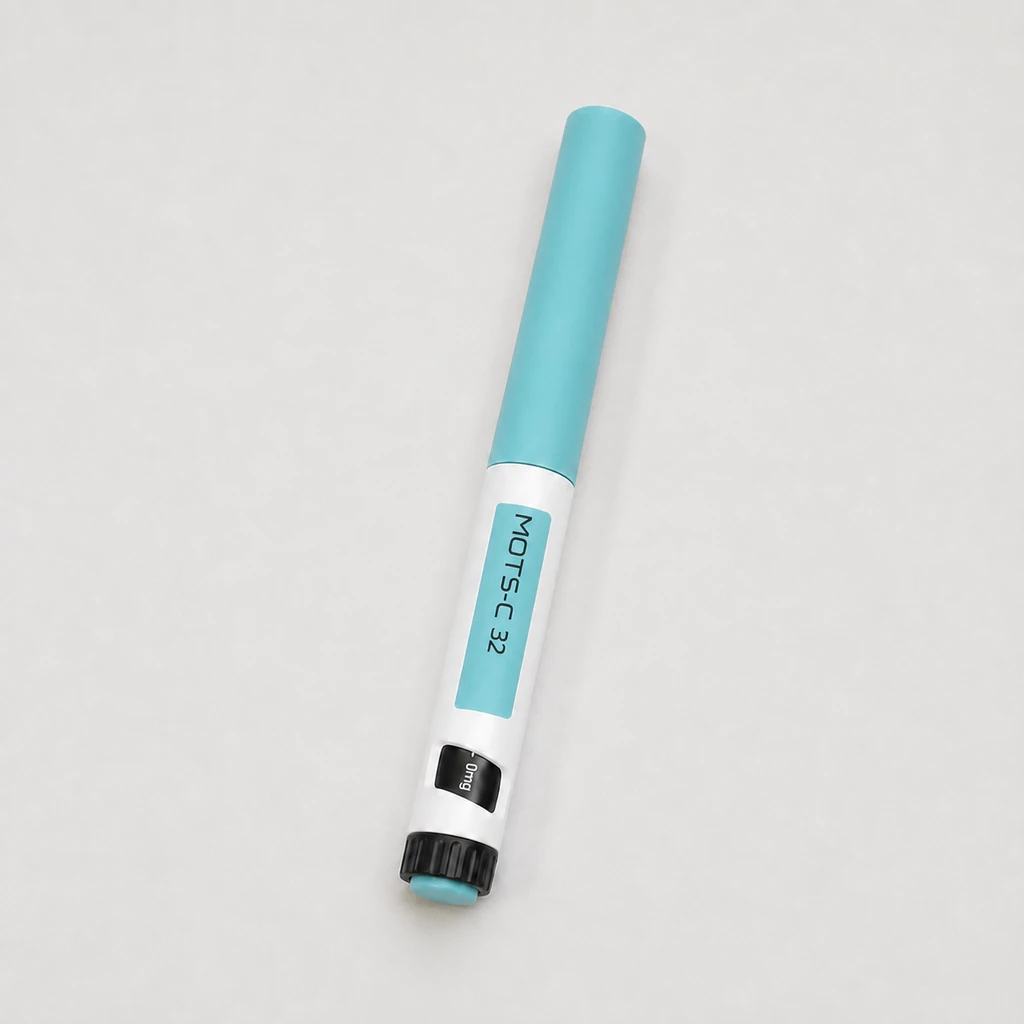
If someone offers a “mitochondrial age” score, ask what was physically measured, which reference group supplied the comparison, how recently participants exercised and what outcome the score has been validated to predict. Store the exact assay name with your notes. A 32 mg MOTS-c pen listing provides total labelled material; it supplies no reference interval for endogenous expression in human muscle or plasma.
Compare two hypothetical laboratories. One samples plasma in the morning after an overnight rest. The other samples muscle tissue from a different set of volunteers after an exercise visit. Even if both print a figure headed MOTS-c, subtracting their means would confound the compartment, people and timing. A valid paired experiment would specify all three before collecting the first sample.