Can a two-person BPC-157 pilot establish the risk of an uncommon side effect?
A report can truthfully say no adverse effects were recorded and still provide very little information about uncommon harms.
A report can truthfully say no adverse effects were recorded and still provide very little information about uncommon harms. The difference turns on the number of people, the time they were observed and the outcomes actively checked. A small BPC-157 pilot illustrates all three.
Read the number before the conclusion
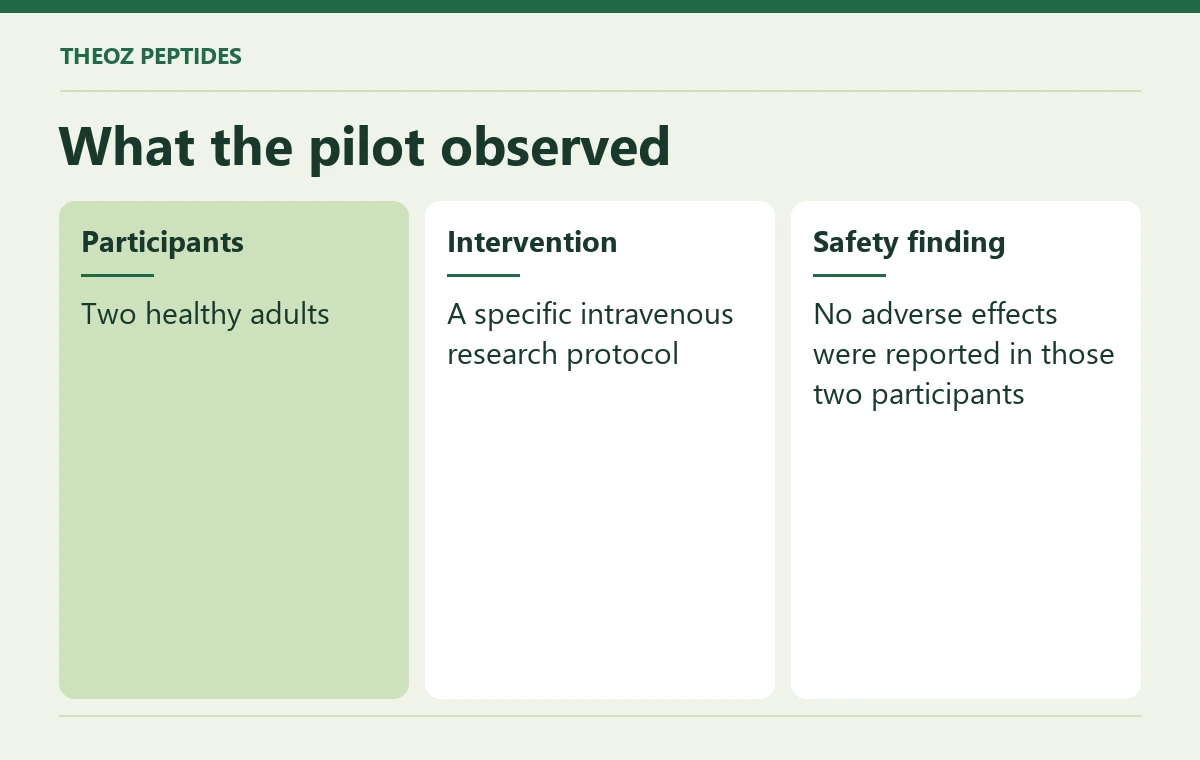
The original BPC-157 pilot report involved two healthy adults and described observations and laboratory measurements during an intravenous protocol. No adverse effects were reported in those two people. That is the observation. Establishing safety across a wider population, repeated use, different formulations, concurrent medicines or longer periods would require much more evidence. A reassuring phrase in an abstract cannot remove the constraints imposed by its design.
Try a probability example
Suppose an event has a one percent chance for each independently observed person during a fixed window. The chance of observing no such event in two people is 0.99 multiplied by 0.99, or approximately 98 percent. Even an event occurring in one of ten comparable people would be missed in both about 81 percent of the time. Those are hypothetical probabilities to illustrate sample size, not estimates of the event rate for BPC-157.
| What the pilot observed | What to look for |
|---|---|
| Participants | Two healthy adults |
| Intervention | A specific intravenous research protocol |
| Safety finding | No adverse effects were reported in those two participants |
Which safety questions were beyond the design?
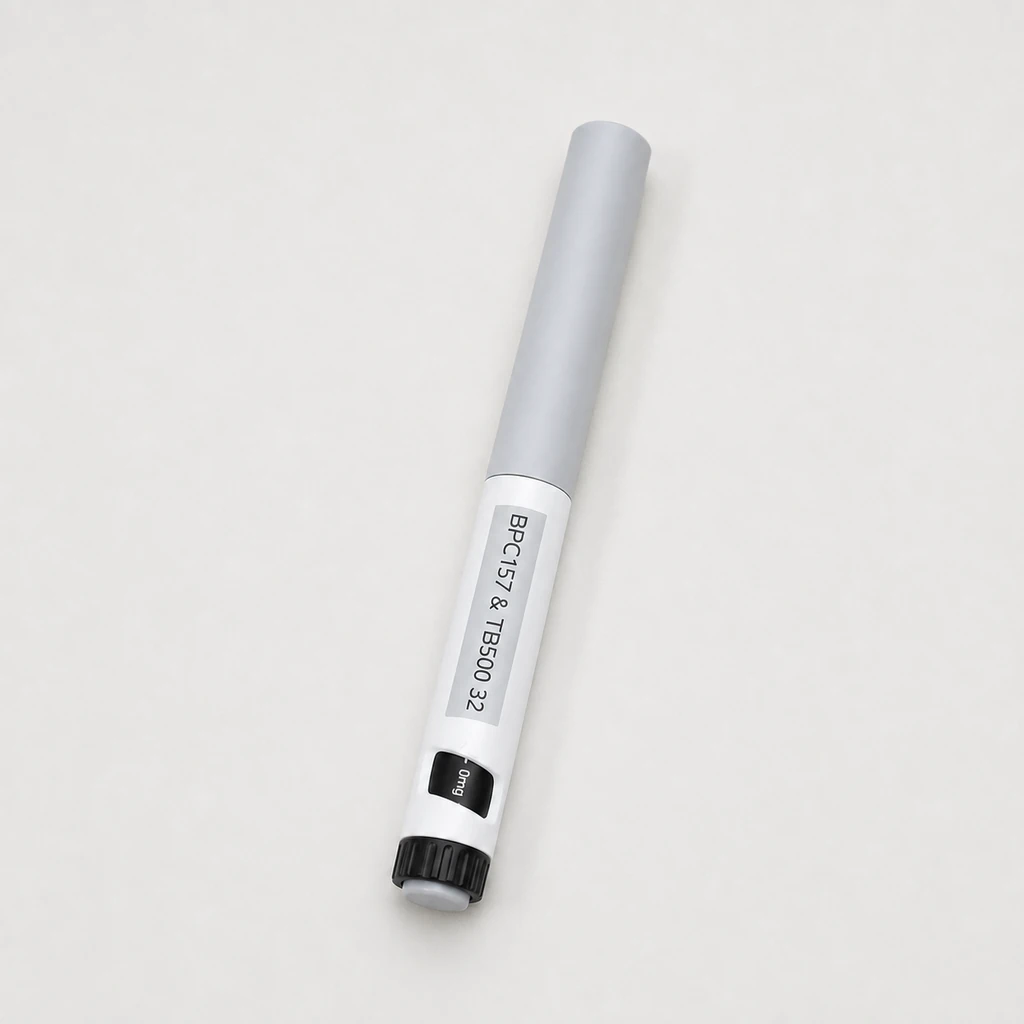
An immediate observation, a short-term laboratory panel and delayed symptoms capture different risks. An untested outcome has not been cleared because a different blood test remained within a reference interval. A pair of healthy volunteers cannot represent people with organ disease, multiple medications or known allergies. An intravenous preparation supplied under observation also differs from a retail combination pen containing another named ingredient. No numerical adjustment can resolve all those differences.
What to write on a Bali research card
A precise summary is “two observed participants, no reported events under this protocol, uncommon and delayed harms remain uncertain.” If a seller cites the pilot for a BPC-157/TB-500 blend, ask where that exact blend, route and population were studied. A clinician can assess symptoms or questions about an actual exposure. Neither the pilot result nor an absence of complaints on a product page can establish an individual's safety.