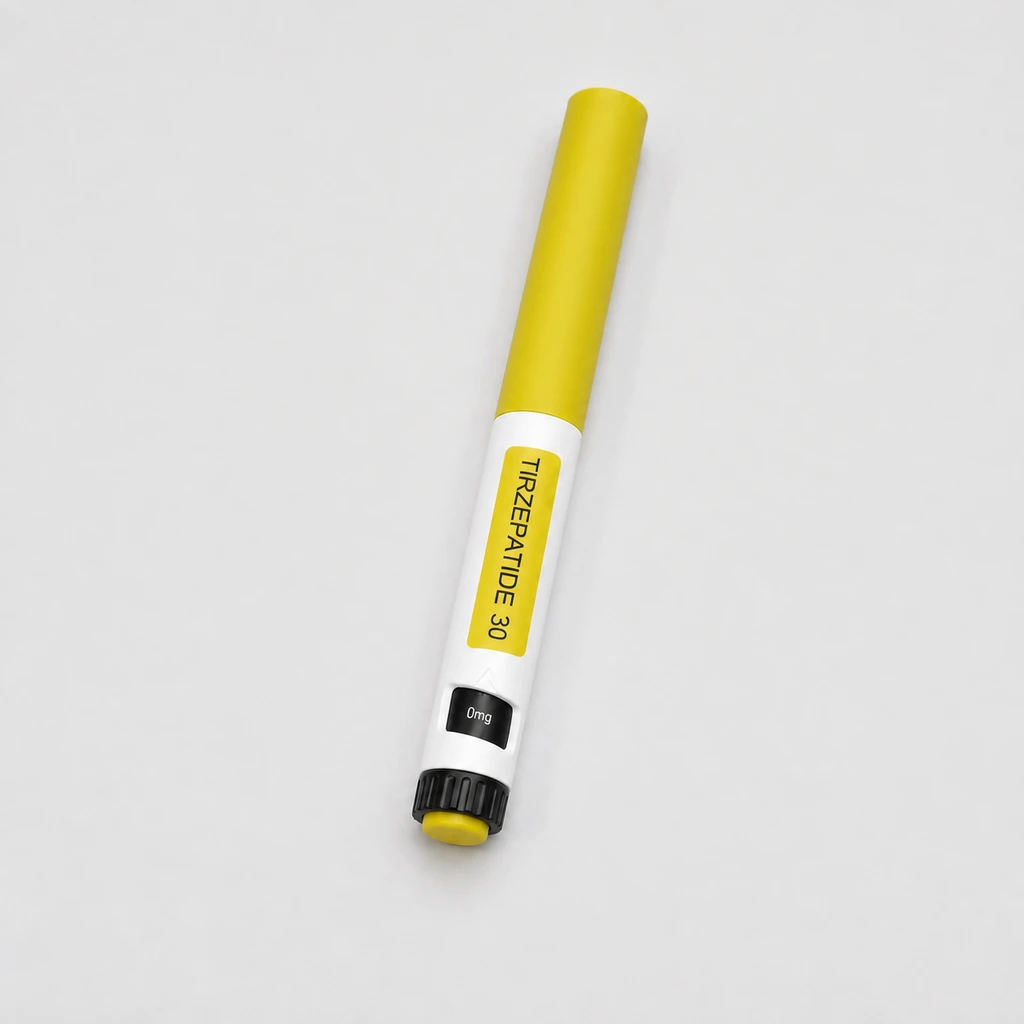
Tirzepatide, Fat Loss and Lean Mass: A Bali Training Guide
Understand tirzepatide body-composition findings, why lean mass is not the same as muscle and what to track alongside a Bali training routine.
Weight loss and fat loss are related, but they are not the same measurement. In a body-composition substudy of SURMOUNT-1, tirzepatide reduced both fat mass and lean mass. About three quarters of the lost weight was fat mass and one quarter was lean mass, with a similar proportion in the placebo group. That makes muscle and nutrition questions worth discussing alongside a changing scale number.
For someone training in Bali, the aim of reading this research is practical: understand the measurement, maintain an appropriate routine with professional guidance, and recognise when a programme needs review. The study does not establish a guaranteed way to preserve every kilogram of muscle, and it did not test the local Theoz pen.
Tirzepatide lean-mass research: the actual measurements
The SURMOUNT-1 DXA substudy analysed 160 participants with scans at baseline and week 72. The pooled tirzepatide group had mean changes of −21.3% in body weight, −33.9% in fat mass and −10.9% in lean mass. The study measured those compartments separately.
| Measurement | What it helps answer |
|---|---|
| Body weight | How much total mass changed |
| Fat mass | How much of the measured fat compartment changed |
| Lean mass | How much non-fat soft tissue changed |
| Strength or physical function | What someone can do; not established by weight alone |
The percentage change in a compartment is different from its share of the weight lost. A 10.9% reduction in lean mass does not mean that 10.9% of the total weight loss was lean mass. Mixing those two calculations is a common source of alarming or overconfident headlines.
Lean mass is not a direct muscle-performance score
DXA lean mass includes more than skeletal muscle. It does not directly tell you how much force a person can produce, how well they recover between sessions or whether a particular exercise is easier. A commercial scale's estimated “muscle” figure is another measurement again, not an interchangeable substitute for a research DXA result.
That does not make body-composition data unhelpful. It means the reading needs context. If you are already monitoring a programme with a clinician or qualified nutrition professional, ask which measurements are useful for your situation and how often they should be repeated. Repeating an inconsistent measurement every day does not make it more informative.
Keep food and training in the same conversation
Reduced appetite can make ordinary meals feel different. It is worth reviewing whether a routine still includes enough appropriate food and fluids for the individual, rather than treating the smallest possible intake as the goal. The NIDDK guidance on eating and physical activity places sustainable food choices and activity together in weight management.
For a Bali routine, think in repeatable choices: a breakfast that remains manageable, food available near your workplace, and training that fits the week rather than only a holiday burst. These are planning examples, not a personalised protein target or exercise prescription. Anyone struggling to eat, keep fluids down or maintain normal function needs a clinical review rather than a harder training target.
A simple progress record for an active Bali week
Keep a short record you can discuss at follow-up. Use consistent conditions where practical, and include how you feel and function instead of collecting only favourable numbers.
- Body-weight trend, measured with the same device and routine.
- Meals that are manageable and any persistent difficulty eating.
- A few established training measures, such as familiar exercise loads or walking tolerance.
- Symptoms that disrupt normal daily activity.
- Changes in schedule, illness, travel or other medicines.
A long surf day, a flight and a demanding gym session can make two days very different. Recording that context is more useful than inventing a precise explanation for every fluctuation. Your clinician can decide whether a trend needs assessment or whether a different measurement is appropriate.
Keep the product comparison separate from the fitness outcome
Theoz offers Tirzepatide 30 mg and 60 mg pens at IDR 3,500,000 and IDR 5,400,000. The larger pen contains more total ingredient; it does not carry a promise of superior muscle preservation or faster progress. The total quantity is not an instruction to increase an individual amount.
If you are ordering in Canggu, Seminyak or another Bali area, confirm the exact variant and documentation first. Then arrange the receiving details. Buying multiple pens for free delivery should follow an appropriate, documented plan, not create one. The format comparison explains the catalogue quantities without turning them into a schedule.
Common questions
Does losing lean mass mean all the lost tissue was muscle?
No. Lean mass is a broader measured compartment. It is still relevant to discuss, but it cannot be translated directly into a claim about strength lost or a precise amount of skeletal muscle without additional assessment.
Can a bundle guarantee that muscle is preserved?
No such guarantee follows from a catalogue bundle or the DXA study. For a useful starting point, review the evidence with your clinician, keep a consistent food-and-training record, and compare the exact product format only after the clinical decision is clear.