Why two nicotinamide skin-cancer trials gave different answers
Sun exposure is an everyday consideration in Bali, so a headline about a B3 compound and skin cancer can attract attention.
Sun exposure is an everyday consideration in Bali, so a headline about a B3 compound and skin cancer can attract attention. Two placebo-controlled studies of oral nicotinamide reached different conclusions in different high-risk populations. Reading the population is essential before treating either conclusion as universally applicable.
Start with the earlier trial
The ONTRAC primary report enrolled people at high risk who had previously experienced multiple nonmelanoma skin cancers. Investigators counted new cancers under the study's protocol. They reported a lower rate of new nonmelanoma skin cancers during treatment with oral nicotinamide than placebo. This was secondary prevention in a particular population. It was not a trial in everyone with sun exposure or a demonstration that any B3-related product prevents cancer.
What changed in the transplant study?
The ONTRANS trial studied solid-organ transplant recipients receiving immunosuppression. Over its twelve-month study period, oral nicotinamide did not reduce the number of keratinocyte cancers or actinic keratoses compared with placebo. Recruitment and statistical precision are important context when interpreting a negative study. The different settings mean that the two reports should not be presented as a simple contradiction or blended into a promise for the general public.
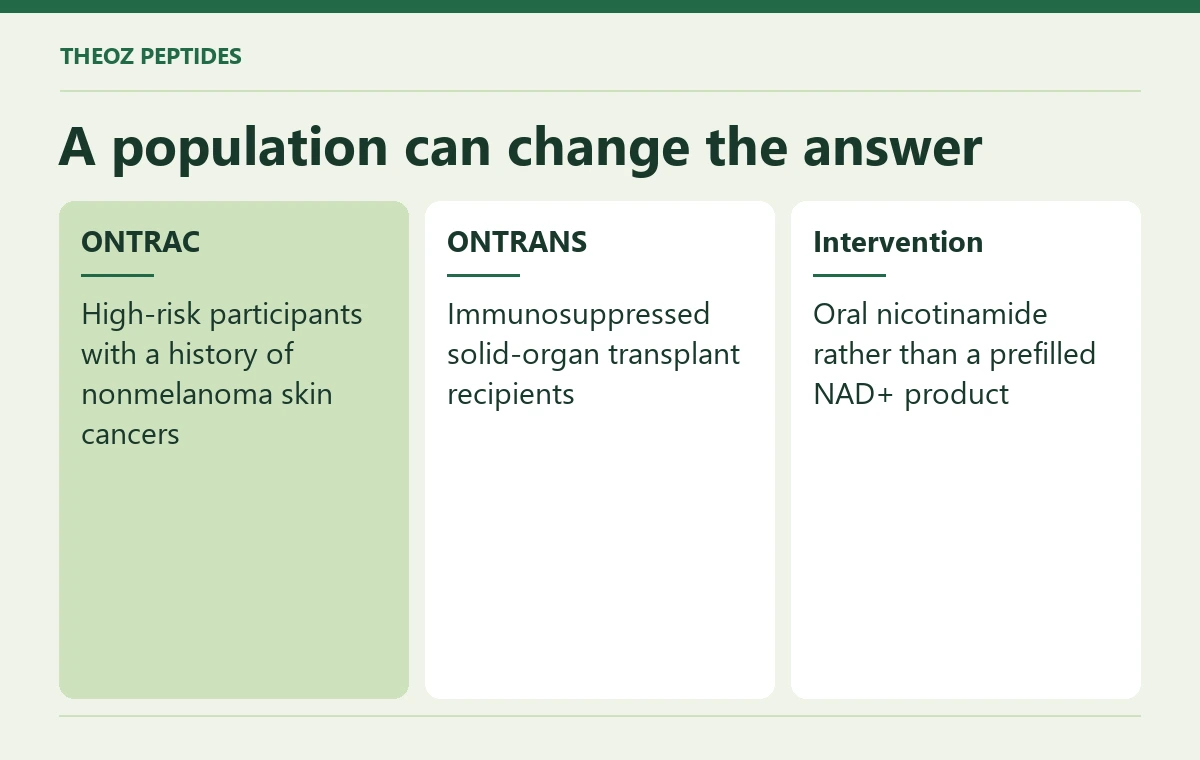
| A population can change the answer | What to look for |
|---|---|
| ONTRAC | High-risk participants with a history of nonmelanoma skin cancers |
| ONTRANS | Immunosuppressed solid-organ transplant recipients |
| Intervention | Oral nicotinamide rather than a prefilled NAD+ product |
Keep the ingredient and outcome precise
Nicotinamide is a B3 form involved in NAD-related metabolism. An oral nicotinamide intervention cannot be relabelled as a trial of a prefilled NAD+ pen. A counted skin cancer is also a different outcome from a change in pigmentation, hydration, molecular biomarkers or discomfort in sunlight. The observation period matters because a result while taking an intervention does not automatically demonstrate a persistent effect after it stops.
A useful Bali decision
If you have a history of skin cancer or take immunosuppressive medication, bring the actual diagnosis, treatment and surveillance history to your dermatology team. Ask which study population and prevention outcome resemble your situation. Continue appropriate sun protection and seek assessment of concerning lesions. The existence of NAD+ in a catalogue does not replace surveillance or establish a prevention regimen for someone living under tropical sunlight.